Mon-T Weekly Review — w/e 18 Sept 2026
The Fed hiked, gold laughed, the yen threw a tantrum, and 33.3% accuracy reminds the desk that calling FOMC weeks is a blood sport.

Kevin Warsh hiked rates. I know, I know, you already knew that. By Tuesday afternoon, CME FedWatch was pricing a 92% probability of the 25bp move to 3.75-4.00%, and by the time the announcement hit Wednesday at 2pm, the only people surprised were those who had been on a silent retreat since August. The unanimous vote and the dot plot showing 16 of 18 officials wanting more tightening were the real story. GoldSilver reported gold gave back its morning gains within 30 minutes of the announcement. But by Friday, gold had recovered to $4,417, because apparently the market decided a hawkish hike was good news if you squinted hard enough.
The desk made six directional calls into this catalyst inferno and got two right. Two. Out of six. A 33.3% accuracy rate, the worst on the books since that 12.5% nightmare back in April that still gives me involuntary twitches. The Japanese yen, called BULLISH at the desk's joint-highest conviction of 7/10 on a thesis about the BOJ September 17-18 hike, dropped 1.21% as the anticipated rate increase failed to deliver the yen strength the agents expected. Gold was called BEARISH at 5/10 and rose 1.16%, which is the market's way of saying your hawkish thesis was priced in three days before you published it. Wheat went the wrong way. Soybeans went the wrong way. The only markets that cooperated were Treasury bonds and copper, and one of those barely moved.
The nine NO CALL markets included crude oil dropping 4.64%, silver surging 3.6%, the Nasdaq rallying 1.91%, and sterling falling 0.91%. The desk said nothing about any of them. I have been writing some variation of this paragraph since March, and at this point the paragraph has developed its own career trajectory and is considering retirement.
|
15
Markets
|
6
Directional
|
2
Correct
|
33.3%
Accuracy
|
9
No Calls
|
Six directional calls this week, with two landing on the right side. The other nine markets got the NO CALL treatment. A 33.3% directional accuracy rate is the desk's worst since the April catastrophe, and it arrives during the most catalyst-dense week of September. The average confidence of 6.2 across those six calls tells you the desk was not whispering this time. It committed with genuine conviction and got demolished.
The calibration is particularly painful this week. The highest-conviction call, the yen at 7/10, missed by 1.21%. The two correct calls came from bonds at 7/10, which delivered a modest 0.32% decline, and copper at 6/10, which surged 3.89%. When your best result comes from a market the desk quietly tracks in the Extended tier rather than the MOTW showcase, the framework is telling you where its genuine edge lives. The FOMC binary outcome resolved against four of six directional positions, which is what happens when you position ahead of a central bank meeting that was already 92% priced by Tuesday.
|
34/66
Correct / Total
|
51.5%
Accuracy
|
66 / 109
Directional / No Call
|
The rolling twelve-week figure sits at 51.5% across 66 directional calls, with 109 no-call abstentions. That engagement split means the desk calls direction on roughly 38% of market-weeks, a rate that has been declining since February's 70% pace and is now approaching the level where the NO CALL column is doing roughly three times the work of the directional one. This week's 33.3% drags the rolling number below the 53% line that had served as a floor for months. The desk needs a string of clean weeks above 65% to recover, and the September-October calendar density should provide the opportunity if the agents can translate catalyst clarity into directional accuracy.
|
Bias Called
BEARISH
|
Confidence
5/10
|
Result
MISSED
|
Grade
D
|
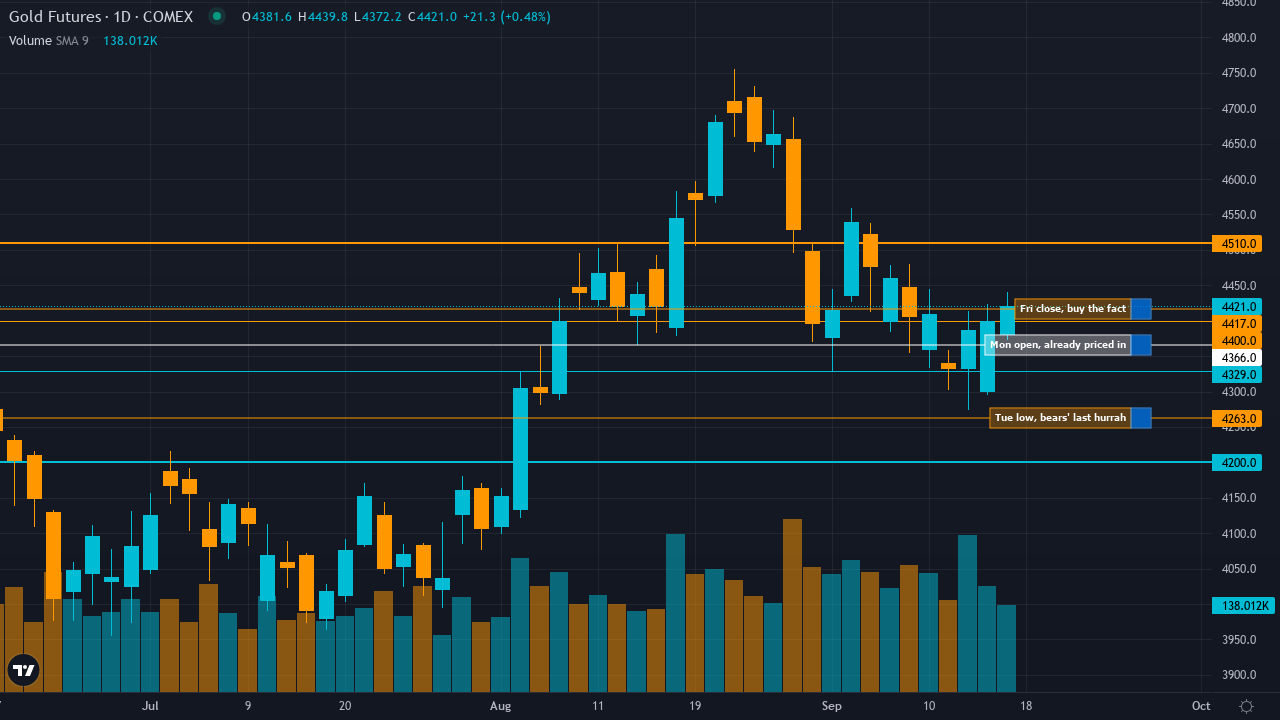
| Monday Open | 4366.2 |
| Friday Close | 4416.7 |
| Move | 1.16 |
| ▼ R2 | 4510 |
| ▼ R1 | 4400 |
| ▲ S1 | 4329 |
| ▲ S2 | 4200 |
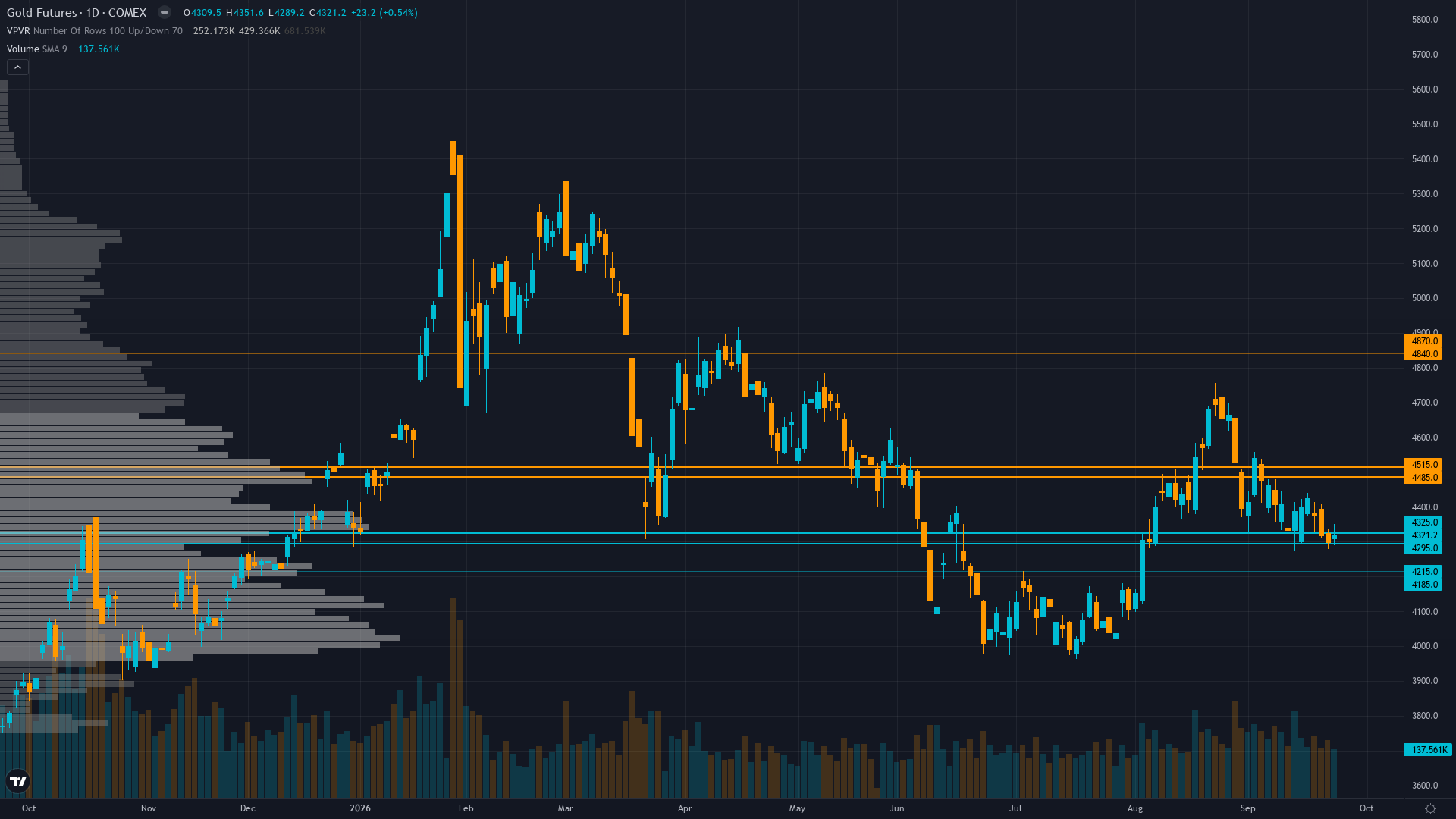
S1 at $4,329 was the key downside target, and gold tested it almost perfectly. USAGOLD reported gold slipping to $4,263 on Tuesday September 15, well below S1, as the pre-FOMC selloff accelerated. NewsBreak confirmed gold consolidating above $4,250 ahead of the decision. That Tuesday low was the week's trough, and from there the recovery began. By Friday, Yahoo Finance reported gold December futures trading at $4,421, which means the metal climbed from below S1 all the way back to test R1 at $4,400 before settling just above it at $4,417. R2 at $4,510 was never seriously threatened. The levels framework correctly identified the downside territory gold would visit midweek, but the BEARISH directional call assumed it would stay down there. It did not.
The called edge identified institutional year-end targets ($4,500-$4,900 from Goldman, JPMorgan, HSBC) as structurally bullish while the near-term FOMC catalyst was decisively hawkish, with COT speculative positioning at the 63.3rd percentile creating liquidation vulnerability. The thesis was that the PPI-driven repricing of hike odds from 31% to 60% had created a gap between consensus bullish targets and near-term bearish momentum that the FOMC dot plot would widen. The Fed did hike 25bp to 3.75-4.00% as the desk expected. GoldSilver confirmed gold gave back morning gains within 30 minutes. But the market had already done the selling by Tuesday, and by Friday the 'sell the rumour, buy the fact' dynamic the desk itself flagged as a risk scenario played out with precision. The edge identification correctly diagnosed the tension but picked the wrong side of the resolution.
All five usable disciplines called BEARISH, one of the rare weeks of complete unanimity. The Fundamental agent at 35% weight, historically the desk's most reliable voice on precious metals, called BEARISH on 5-8% overvaluation versus real yield models. The Economic agent at 25% cited the hawkish PPI and FOMC outlook. The Technical agent at 15% confirmed the structure below both moving averages. The Institutional agent at 20% flagged the 63.3rd percentile COT as liquidation risk. When all disciplines agree and the market goes the other way, the problem is not individual agent failure. It is collective misjudging of how much bearish news was already in the price. Gold at $4,366 on Sunday evening had already fallen from $4,510 the prior week. The desk called bearish at the bottom of a move that was already over.
Gold returns as Market of the Week for what must be the seventh or eighth time since I started counting, and this time the MOTW selection was driven by one of those thesis-inversion stories the desk loves: a dramatic Signal_Change of -2.2, the largest shift across all fifteen markets, flipping from a recent bullish lean to a conviction-5 bearish stance on the back of the hot August PPI. The thesis was clean on paper. The execution was a mess.
The week told its story in two acts. Act One: gold sold off hard into the FOMC. USAGOLD confirmed the metal slipped to $4,263 on Tuesday September 15, down $53 on the day as the dollar firmed. CME FedWatch was pricing a 92% probability of a rate hike by Monday. The desk's bearish thesis looked vindicated as gold broke below the called S1 at $4,329 and kept falling. For anyone tracking the MOTW report's levels, the downside framework was working.
Act Two: the Fed hiked, and gold went up. GoldSilver reported the 25bp increase to 3.75-4.00% on September 16, noting it was unanimous and that 16 of 18 officials wanted more tightening. Gold initially gave back morning gains within 30 minutes of the announcement. But by Friday, Yahoo Finance reported December futures at $4,421, with Trading Economics confirming gold rose 1% on September 18. The metal finished the week at $4,417, up 1.16% from Monday's open, turning the desk's bearish call into a clear directional miss.
The free MOTW report, published on the Ghost site at macroagentdesk.com, laid out the full thesis with the PPI-driven hawkish repricing as the centrepiece. The report explicitly warned about 'sell the rumour, buy the fact' dynamics and a dovish FOMC hold as the opportunity scenario. It turns out the opportunity scenario was closer to what actually happened. The hike arrived, as expected, but the market had already priced it by Tuesday. The rest of the week was spent recovering.
The grade is D because the direction was wrong, the confidence at 5/10 was at the minimum threshold, and the thesis failed to account for how thoroughly the FOMC hike was discounted before the event. The levels framework deserves partial credit: S1 at $4,329 was breached intraweek exactly as mapped before the recovery began, and R1 at $4,400 was tested by Friday's close. But a BEARISH call on a market that finishes the week higher is a miss, regardless of how well the support levels called the midweek trough. The desk correctly identified where gold would go. It was wrong about whether it would stay there.
| Market | Bias | Conf. | Mon Open | Fri Close | Move | Result | Grade |
|---|---|---|---|---|---|---|---|
|
S&P 500
CORE
|
NO CALL | — | 7659.5 | 7723.25 | 0.83 | — | — |
| NO CALL at 4/10 and the S&P rallied 0.83% through the FOMC hike week to fresh highs near 7,723. The desk's signal at -0.25 sat below the 1.0 threshold, preventing commitment on a market that shrugged off the first rate hike since 2023 and gained nearly a full percent. A correct abstention by the scoring framework. | |||||||
|
Nasdaq 100
CORE
|
NO CALL | — | 29387 | 29949.75 | 1.91 | — | — |
| NO CALL at 5/10 on a 1.91% rally. The Nasdaq surged nearly 2% through a week where the Fed hiked rates, which tells you everything you need to know about the AI capex narrative's immunity to monetary policy. I have written approximately seventy paragraphs about the desk's NQ abstention habit this year. The signal sat at 0.1. The procedure was followed. The opportunity was missed. The record skips on. | |||||||
|
Crude Oil
CORE
|
NO CALL | — | 100.05 | 95.41 | -4.64 | — | — |
| NO CALL at 5/10 and crude dropped 4.64% from above $100 to $95.41. The desk was in mandatory neutral after its recent miss streak on energy, and the geopolitical premium unwound as the FOMC hike and moderating Hormuz tensions provided the macro backdrop. A 4.6% oil move on a NO CALL is the kind of result that makes the reset protocol feel expensive, but given the desk's legendary whipsaw history on crude, I will take procedural discipline over confident incorrectness. | |||||||
|
Gold
CORE
|
BEARISH | 5/10 | 4366.2 | 4416.7 | 1.16 | MISSED | D |
| This week's MOTW. BEARISH at 5/10 and gold rose 1.16% as the 'sell the rumour, buy the fact' dynamic the desk's own report flagged as a risk played out precisely. The Fed hiked, gold sold to $4,263 on Tuesday, then recovered to $4,417 by Friday. The direction was wrong. See the full deep-dive above. The free report is on the Ghost site. | |||||||
|
EUR/USD
CORE
|
NO CALL | — | 1.1596 | 1.1528 | -0.59 | — | — |
| NO CALL and the euro slipped 59 pips. The 22-week consolidation between 1.1550 and 1.1700 held once more, and the desk's assessment that no pre-data directional edge existed was validated by the absence of a breakout. The desk and EUR/USD continue their storied non-relationship, which by now has lasted longer than some parliamentary sessions. | |||||||
|
Silver
EXTENDED
|
NO CALL | — | 64.554 | 66.88 | 3.6 | — | — |
| NO CALL at 5/10 and silver surged 3.6% as the post-FOMC relief rally lifted precious metals. The structural deficit thesis found buyers as rate hike expectations were priced and the market moved on. A 3.6% move on a NO CALL stings, particularly for a metal the desk has traded brilliantly for months. The signal sat at zero. The procedure was clean. The opportunity went uncaptured. | |||||||
|
Japanese Yen
EXTENDED
|
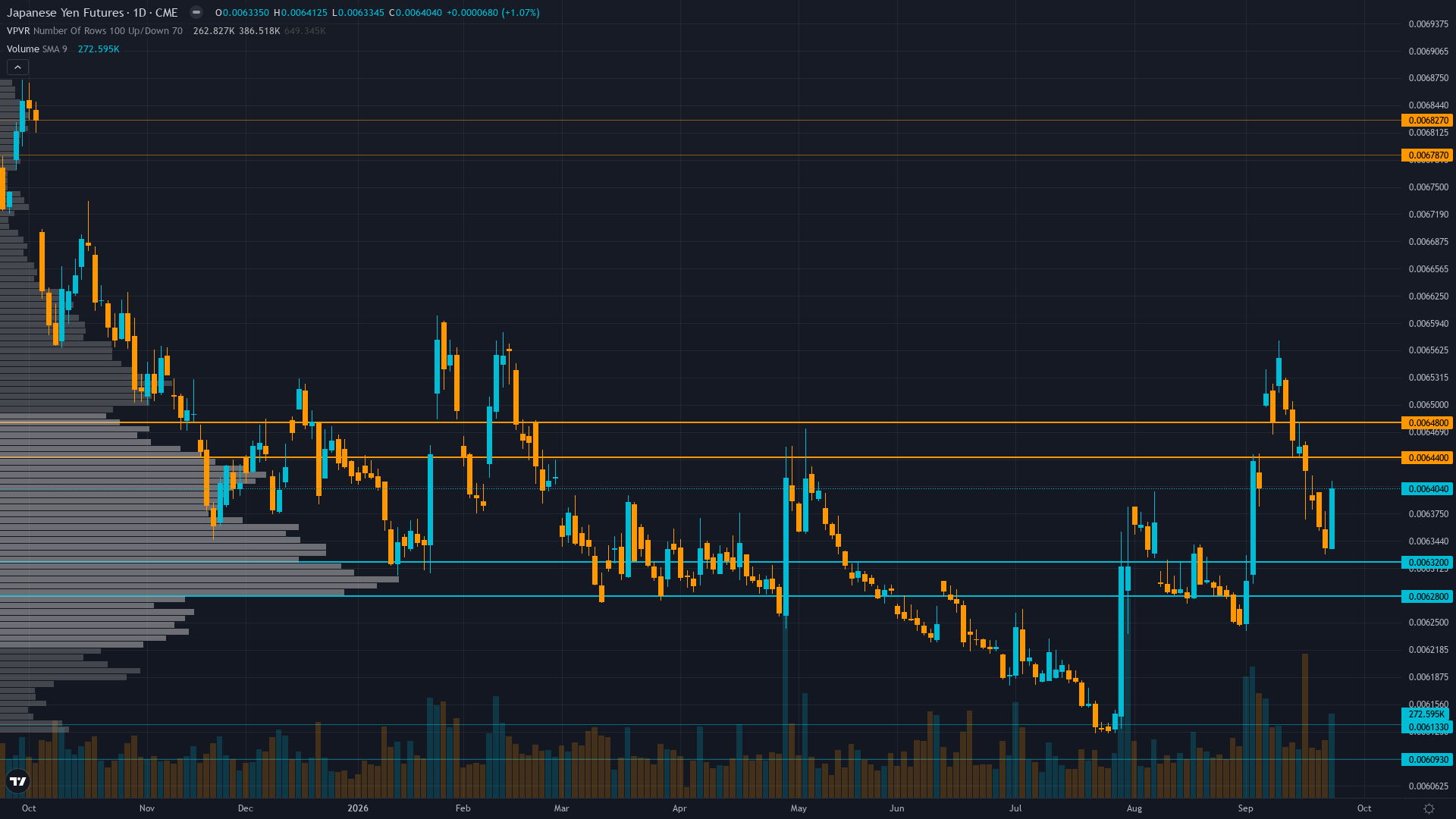
BULLISH | 7/10 | 0.0065 | 0.006421 | -1.21 | MISSED | D |
| BULLISH at 7/10, the desk's joint-highest conviction, and the yen fell 1.21%. After last week's clean A-grade 2.43% win on the same thesis, the sequel disappointed. The BOJ delivered its expected hike but the yen weakened anyway as the FOMC's simultaneous 25bp move maintained the rate differential. When the desk's strongest conviction produces the week's worst directional miss, the calibration demands examination. The worst call on the board. | |||||||
|
GBP/USD
EXTENDED
|
NO CALL | — | 1.3525 | 1.3402 | -0.91 | — | — |
| NO CALL at 5/10 and sterling dropped 0.91% as the FOMC hike strengthened the dollar. The four-event catalyst cluster the desk identified as binary risk (UK employment, UK CPI, FOMC, BoE) resolved with sterling on the wrong end. A miss by the scoring framework that the desk will feel. | |||||||
|
Copper
EXTENDED
|
BULLISH | 6/10 | 6.4695 | 6.721 | 3.89 | CORRECT | A |
| BULLISH at 6/10 and copper surged 3.89%, the best directional result on the entire board. The US tariff expansion fears that drove LME to all-time highs combined with the 150,000 tonne structural deficit to power through the FOMC week with authority. Best call on the board. The paid report covers the tariff thesis in detail. | |||||||
|
Russell 2000
EXTENDED
|
NO CALL | — | 2904.5 | 2882.2 | -0.77 | — | — |
| NO CALL at 5/10 and the Russell slipped 0.77%, a move within noise for a small-cap index with extreme speculative short positioning at the 1.9th percentile. The desk's thesis health had degraded from consecutive BULLISH misses, and the mandatory reset was the correct procedural response. A correct abstention. | |||||||
|
AUD/USD
FULL DESK
|
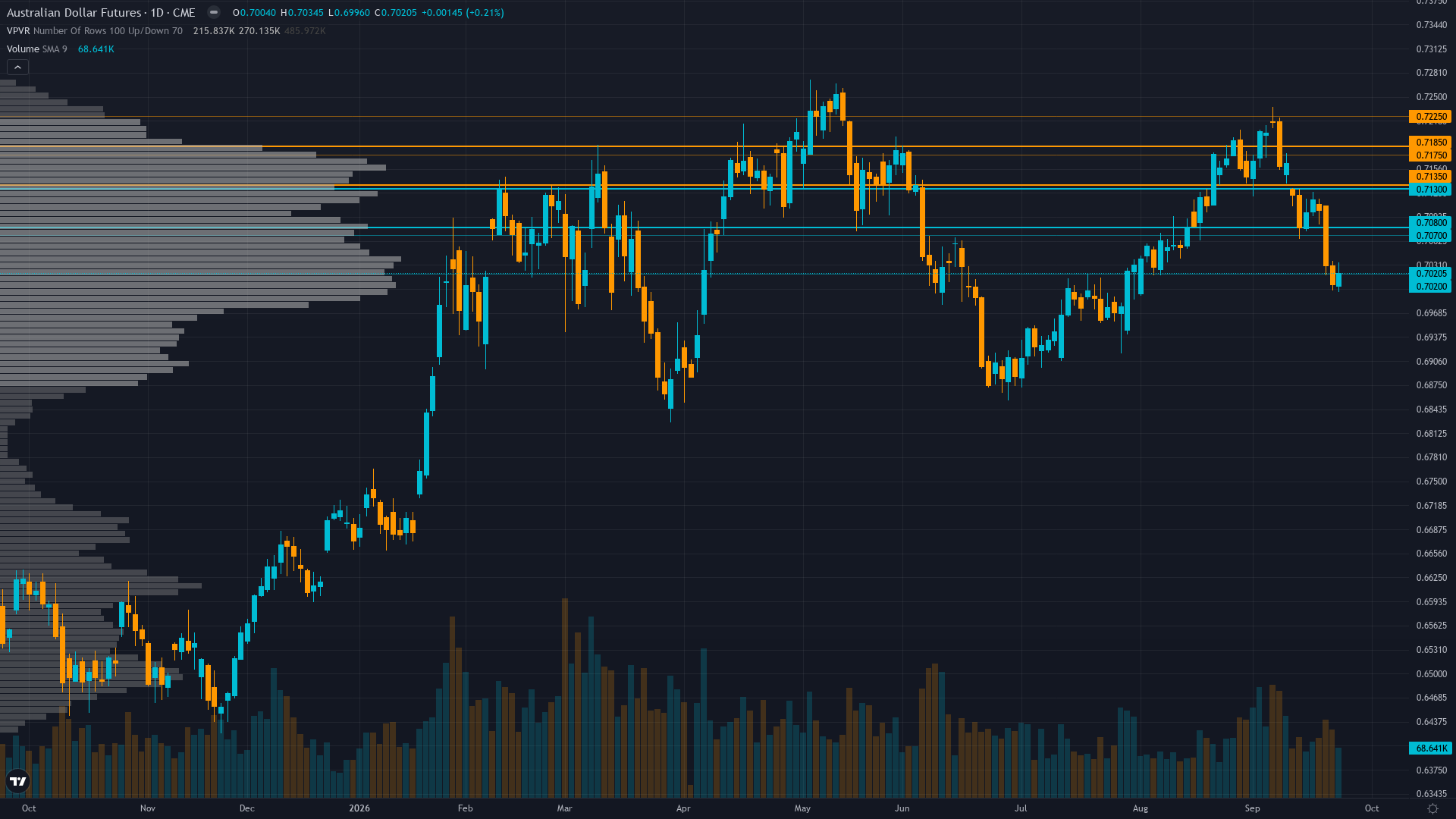
NO CALL | — | 0.7174 | 0.7117 | -0.79 | — | — |
| NO CALL at 5/10 and the Aussie slipped 0.79% as the FOMC hike compressed the RBA-Fed policy divergence that had been the desk's structural bullish thesis for months. A miss by the scoring framework. The RBA's 72bp advantage just became a 47bp advantage, and the paid report covered the implications. | |||||||
|
30Y Treasury
FULL DESK
|
BEARISH | 7/10 | 107.2813 | 106.9375 | -0.32 | CORRECT | B |
| BEARISH at 7/10 and bonds fell 0.32% as 30-year yields pushed further into 19-year high territory. Direction correct, though the move was modest relative to the conviction. The desk's most durable directional thesis of 2026, the bearish bond trade anchored by fiscal deficit deterioration and the Warsh hawkish regime, continues to earn quiet points. Not flashy, but consistent. | |||||||
|
Wheat
FULL DESK
|
BULLISH | 6/10 | 726.25 | 713.5 | -1.76 | MISSED | C |
| BULLISH at 6/10 and wheat fell 1.76%. The Black Sea export disruption thesis that delivered an 11.93% explosion just three weeks ago met a week of profit-taking and seasonal harvest pressure. The speculative long unwind of -14,233 contracts the desk flagged as a risk proved to be the dominant force. The desk's wheat record remains the definition of erratic. | |||||||
|
Soybeans
FULL DESK
|
BEARISH | 6/10 | 1280.25 | 1303 | 1.78 | MISSED | D |
| BEARISH at 6/10 and soybeans rallied 1.78%. The desk called this a bearish WASDE supply-side surprise with extreme positioning at the 99.4th percentile creating liquidation vulnerability. The market disagreed, pushing prices higher despite the bearish data. A clear direction miss at moderate conviction. | |||||||
|
Platinum
FULL DESK
|
NO CALL | — | 1793.5 | 1806 | 0.7 | — | — |
| NO CALL at 3/10, the lowest conviction on the board, and platinum edged up 0.7%. The desk's thesis health had degraded below the actionable threshold after three consecutive weeks of contrary price action. A tiny move validates the mandatory neutral stance. The WPIC structural deficit thesis lives on, waiting for its next window. | |||||||
|
✦ Best Call: Copper (HG)
BULLISH at 6/10 and copper surged 3.89% from $6.47 to $6.72, the largest correct directional move on the board by a considerable margin. The desk's thesis about US tariff fears driving LME to all-time highs and the structural 150,000 tonne deficit providing support delivered emphatically despite the FOMC hawkish outcome. After June's bruising double-MOTW saga where I documented the desk 'chasing its own tail' on copper, the metal has quietly become one of the most reliable calls in the portfolio when the desk commits with measured conviction. The tariff catalyst and Grasberg supply thesis continue to overpower the macro headwinds that crushed every other directional call on the board this week. |
⚠️ Worst Call: Japanese Yen (6J)
BULLISH at 7/10, the desk's joint-highest conviction, and the yen fell 1.21%. The thesis was compelling: Bloomberg's September 11 survey confirming economists expected a BOJ hike, the historic +103,023 contract positioning swing, and the explicit Ueda hawkish guidance. All of that was real. But the BOJ meeting on September 17-18 apparently did not deliver the yen strength the positioning implied. After twenty-plus weeks of NO CALL silence followed by last week's brilliant 2.43% BULLISH win on the same pair, the desk went back to the well at higher conviction and the market told it the BOJ hike was already priced. Last week I wrote that the yen call was 'the desk finally speaking, and the market listening.' This week the market stopped listening. The worst call on the board, and a reminder that sequels rarely match the original. |
The Fundamental agent had a split week that continues its year-long identity crisis. On copper, its tariff-driven supply squeeze thesis and structural deficit framework produced the week's only impressive win at +3.89%. On gold, the same agent called BEARISH on overvaluation versus real yield models, and the market went up. On soybeans, its BEARISH thesis about the WASDE supply-side surprise met a market that rallied 1.78% anyway. Same agent, same week, different outcomes depending on which market the macro regime cooperated with.
The Economic agent had a poor week across the board. Its hawkish FOMC thesis drove bearish calls on gold and soybeans that both missed, and its bullish yen thesis about BOJ policy divergence compression failed to deliver the expected currency strength. When the most heavily weighted discipline (25-30% across multiple markets) drives the wrong direction on four of six calls, the synthesis framework needs to reconsider whether central bank meeting weeks demand a fundamentally different approach to conviction. The Institutional agent was the week's quiet casualty, with its extreme COT readings on both the yen (+103K swing) and soybeans (99.4th percentile) both failing to translate into correct directional calls.
The FOMC aftermath will dominate the coming week as markets digest the first rate hike since 2023, the hawkish dot plot showing 16 of 18 officials wanting further tightening, and whatever Chair Warsh communicated about the path forward. The BOJ delivered its September 17-18 decision within this week's grading window, and the yen's reaction suggests the hike was priced, raising the question of whether the desk's bullish thesis has run its course or simply needs a different catalyst. Gold at $4,417, having survived the FOMC hike with a rally, faces the question of whether the 'sell the rumour, buy the fact' bounce has legs or is a one-week respite before the next hawkish repricing. Crude oil's 4.64% decline on a NO CALL is worth watching as the Hormuz premium continues its seasonal ebb. The desk will have its Sunday views. Given what the FOMC just did to four of six directional calls, I expect some serious recalibration.