Mon-T Weekly Review — w/e 31 Jul 2026
Copper steals the show, the FOMC splits 9-3, and ten NO CALLs watch the yen explode 3% while the desk examines its shoes.

Kevin Warsh's second FOMC delivered the kind of week that rewards the patient and punishes the ambitious. The Fed voted 9-3 to hold rates at 3.5-3.75%, with three officials dissenting in favour of a hike, the most fractured vote in Warsh's brief tenure. CNBC confirmed the Dow tumbled 1,152 points on Wednesday as markets tried to decode whether the growing hawkish dissent represents noise or direction. The S&P fell 1.5% on the day. By Friday, though, China's Politburo had pledged fresh fiscal support for manufacturing, copper jumped on the news, and several markets clawed back their midweek losses.
Three directional calls this week, two correct. A 66.7% accuracy rate from a desk that committed on just three of thirteen markets, with the other ten receiving the NO CALL treatment. The headline win belongs to copper, called BULLISH at 7/10, which gained 2.61% as the Chile winter storm supply thesis and China's Politburo stimulus announcement provided a double catalyst by Friday. The Russell 2000, this week's Market of the Week, was called BEARISH at 6/10 and eked out a correct result with a slim 0.34% decline. The lone directional miss was the Nasdaq, called BEARISH at 6/10, which gained 0.39% in a move so small it amounts to the market politely disagreeing by clearing its throat.
The real story, as it has been for months, lies in those ten abstentions. The yen surged 3.13%, its largest weekly move in recent memory, as the BoJ met on July 30. Sterling rallied 1.16%. The euro gained 1.57%. Soybeans crashed 5.13%. Wheat collapsed 6.04%. The desk said nothing about any of it. I have been writing some variation of this paragraph since March, and the record keeps skipping to the same groove.
|
13
Markets
|
3
Directional
|
2
Correct
|
66.7%
Accuracy
|
10
No Calls
|
Three directional calls this week, with two landing on the right side. The other ten markets got the NO CALL treatment. A 66.7% directional accuracy rate is respectable, though the sample size of three makes the percentage swing violently on a single result. The average confidence of 6.3 across those three calls shows the desk committed with genuine conviction where it did commit, rather than whispering at minimum threshold.
The confidence calibration was inverted in a mild but familiar way. The highest conviction call, copper at 7/10, delivered the week's best result with a clean 2.61% gain. The two 6/10 calls split: RTY BEARISH scraped a correct 0.34% decline while NQ BEARISH missed by 0.39% in the wrong direction. When your strongest conviction produces your best result, the system is doing something right, even if the total sample is too small to draw conclusions. The ten NO CALL markets included five moves exceeding 1%, with the yen's 3.13% surge, soybeans' 5.13% crash, and wheat's 6.04% collapse leading the parade of missed opportunities.
|
40/73
Correct / Total
|
54.8%
Accuracy
|
73 / 100
Directional / No Call
|
The rolling twelve-week figure sits at 54.8% across 73 directional calls, with 100 no-call abstentions. That engagement split means the desk calls direction on roughly 42% of market-weeks, a rate that has continued its slow decline from February's 70% pace. The number hovers stubbornly in the mid-fifties, and this week's 66.7% on three calls barely moves the needle given the tiny denominator. The desk needs to either increase its directional volume while maintaining accuracy above 65%, or accept that the rolling average will remain hostage to whatever bad week happened most recently. At 54.8%, we are barely above the threshold where following the desk offers measurable advantage over a coin.
|
Bias Called
BEARISH
|
Confidence
6/10
|
Result
CORRECT
|
Grade
C+
|
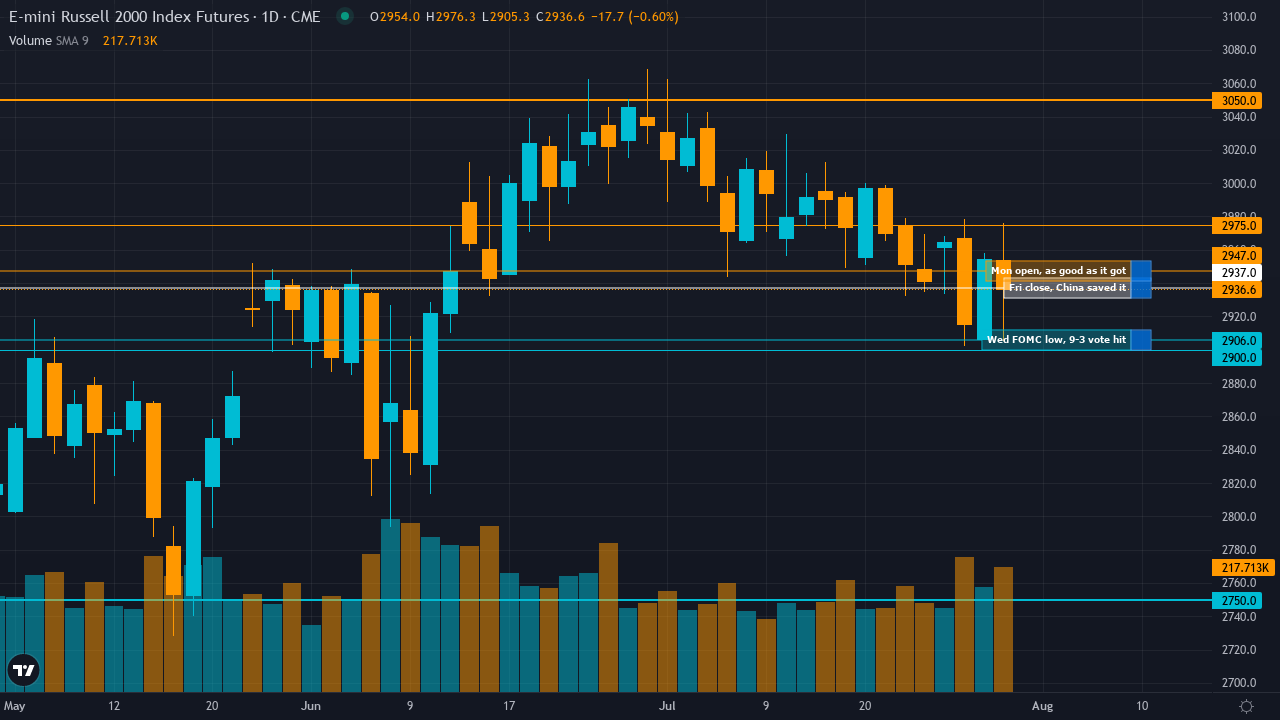
| Monday Open | 2946.9 |
| Friday Close | 2937 |
| Move | -0.34 |
| ▼ R2 | 3050 |
| ▼ R1 | 2975 |
| ▲ S1 | 2900 |
| ▲ S2 | 2750 |
Neither resistance level was seriously tested, and S1 at 2900 provided a distant floor that the index never approached. The Russell opened Monday at 2946.9, sold off through Wednesday when the Dow tumbled 1,152 points on the FOMC's fractured 9-3 vote, then recovered into Friday as China's Politburo stimulus announcement lifted risk appetite globally. Friday's close at 2937 settled roughly midway between Monday's open and the midweek lows, well inside the 2900-2975 range the desk mapped. R1 at 2975 acted as an untested ceiling, and S1 at 2900 provided context that was never needed. The levels framework bracketed the action adequately, though the 0.34% move meant neither boundary was seriously engaged.
The called edge centred on the 25% FOMC hike probability creating asymmetric downside risk for credit-sensitive small caps, where 31% of EBITDA goes to interest expense. The desk argued that complacent options positioning, with VIX at 16.64 and equity put/call at 0.61, had not priced the hawkish tail risk from the growing dissent within the FOMC. That thesis was partially validated. The Fed did hold as expected, but the 9-3 vote with three members wanting a hike was the most fractured decision in Warsh's tenure, and Investrade confirmed the Russell fell 1.61% on Wednesday alone as markets digested the dissent. The recovery into Friday, driven by China stimulus, moderated the weekly result to a slim 0.34% decline. The edge identification was directionally correct but the magnitude was modest.
The Technical agent drove the bearish signal with a -2.5 reading at confidence 7, flagging the confirmed downtrend below both 50-day and 200-day MAs with RSI at 33.7 and MACD at -11.97. That proved directionally correct, if only just. The Sentiment agent provided the contrarian bullish voice at +0.5, confidence 5, noting the AAII bearish swing to -12.7% spread. The Options agent was the loudest bullish dissenter at +1.5, confidence 6, reading VIX complacency as a bullish signal rather than a vulnerability. In the event, the VIX-complacency read was wrong in the short term, as the midweek selloff on the FOMC demonstrated, but the Friday recovery meant the options thesis was not entirely without merit. The Economic agent's mild bearish lean on the transitional macro regime proved the most useful framework for understanding why the FOMC's hawkish fracture created immediate downside pressure on rate-sensitive small caps.
The Russell 2000 made its second appearance as Market of the Week, and after the June 19 debut that delivered a clean A-grade 2.57% bullish win on the reconstitution thesis, this week's result is altogether more muted. BEARISH at 6/10 conviction, the index declined 0.34% from Monday's 2946.9 to Friday's 2937. A correct call, technically, but one that required a generous reading of what constitutes a meaningful directional result.
The week's narrative was defined by two events separated by 48 hours. On Wednesday, the FOMC delivered a 9-3 vote to hold rates at 3.5-3.75%, with three members dissenting in favour of a hike. CNBC confirmed the decision was the most fractured in Warsh's tenure. Business Insider described it as 'the second rate hold under new Fed chair Kevin Warsh' with growing dissent. The New York Times reported Warsh vowed to fight persistent inflation without offering specifics about whether that would include raising rates. The Russell, with its 31% EBITDA-to-interest-expense sensitivity that the MOTW report flagged as the key vulnerability, fell 1.61% on Wednesday alone per Investrade. TheStreet confirmed the Russell gained 0.20% on the day in its final tally, suggesting a late-session recovery from the worst levels.
Then came Friday. China's Politburo pledged fresh fiscal support for manufacturing, and The Rio Times confirmed copper jumped 2.58% on the news while Southern Copper and Freeport-McMoRan shares surged over 5%. The risk-on impulse from China stimulus lifted everything from commodities to equities, and the Russell recovered enough to close at 2937, trimming the weekly loss to a sliver.
The free MOTW report, published on the Ghost site Sunday evening, laid out the bearish thesis with the FOMC as the dominant binary catalyst and the 31% EBITDA interest expense burden as the structural vulnerability. The report correctly identified that consensus was underpricing the hawkish dissent risk at 25% hike probability. Three members voting for a hike validated that concern. But the magnitude of the weekly result, a 0.34% decline that barely clears the noise floor, means the thesis was directionally correct without being particularly useful as a trading framework.
The grade is C+ because direction was correct but the move was negligible at 0.34%, the levels were not tested, and the midweek selloff that validated the thesis was substantially reversed by Friday's China stimulus rally. The desk called the FOMC risk correctly and caught the right direction, but the reward was thin. After seven consecutive correct calls heading into this week, the streak extends to eight, which is the longest active winning sequence on any market in the desk's 2026 history. That streak deserves recognition even when the individual weekly result is modest.
| Market | Bias | Conf. | Mon Open | Fri Close | Move | Result | Grade |
|---|---|---|---|---|---|---|---|
|
S&P 500
CORE
|
NO CALL | — | 7447.5 | 7522.25 | 1 | — | — |
| NO CALL at 5/10 and the S&P rallied 1.0% to 7,522 as the FOMC's hold decision and Friday's China stimulus lifted equities. The desk's sub-threshold signal prevented commitment on a market that gained a full percent. I have been documenting this pattern since the spring, and the melody has not changed. | |||||||
|
Nasdaq 100
CORE
|
BEARISH | 6/10 | 28282.25 | 28391.5 | 0.39 | MISSED | C |
| BEARISH at 6/10 and the Nasdaq gained 0.39%. The smallest possible miss on a market where the desk has struggled all year. The FOMC's 9-3 vote hammered tech midweek, but the Friday recovery on China stimulus and earnings erased the damage. A C grade for a direction miss on a tiny move at moderate conviction. | |||||||
|
Gold
CORE
|
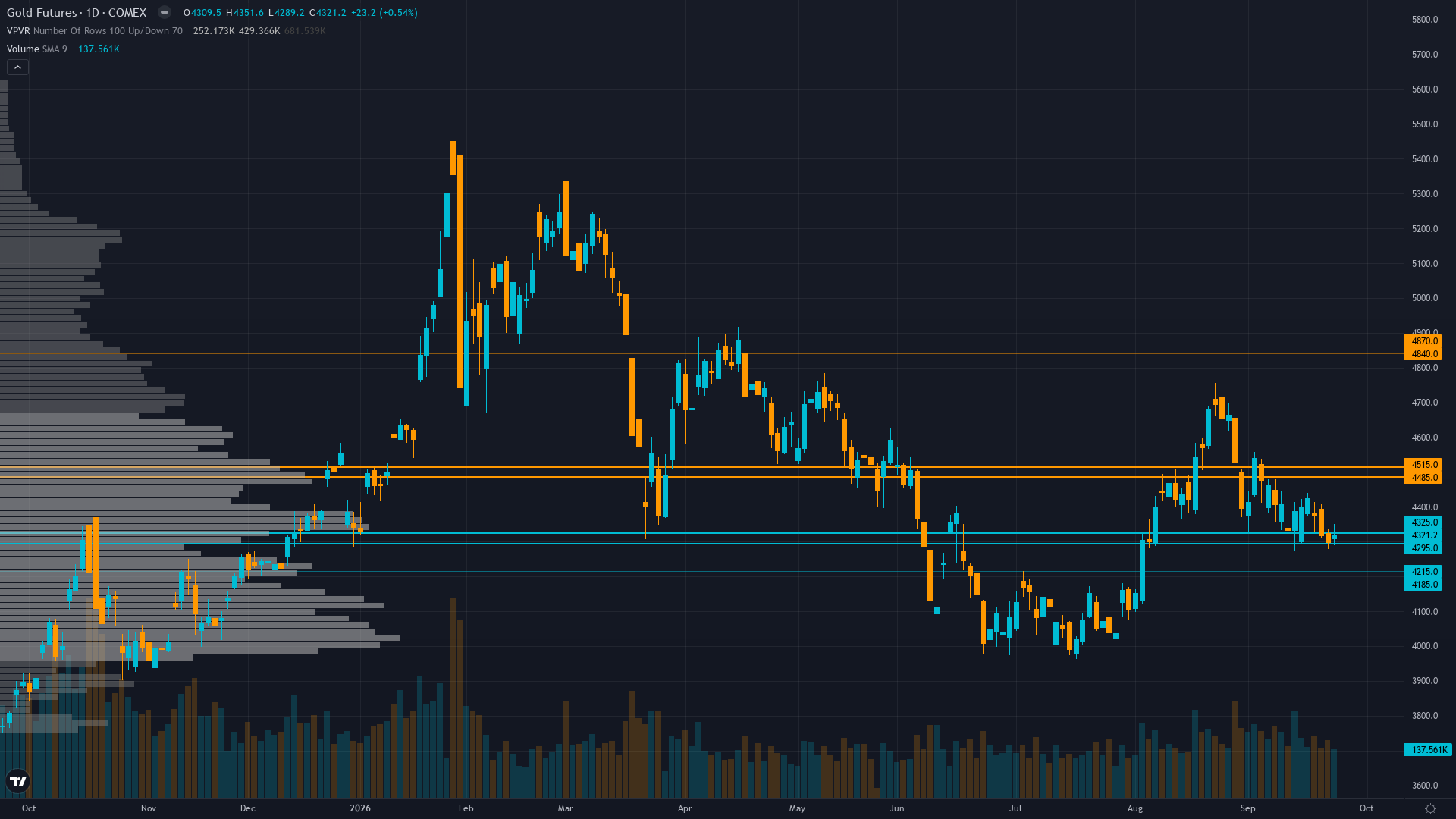
NO CALL | — | 4070.8 | 4103.8 | 0.81 | — | — |
| NO CALL at 5/10 and gold gained 0.81%. The metal found modest support as the FOMC held rates and the dollar softened into Friday. A sub-1% move validates the abstention, and the desk's prolonged gold purgatory since the January $5,626 peak continues without resolution. | |||||||
|
EUR/USD
CORE
|
NO CALL | — | 1.1367 | 1.1545 | 1.57 | — | — |
| NO CALL for the twentieth consecutive week, and the euro surged 1.57%, its largest weekly move in months. The FOMC's fractured vote and dollar weakness drove the breakout from the range the desk has been watching since March. Twenty weeks of silence on the most traded currency pair in the world. At this point, the streak has earned its own pension. | |||||||
|
Silver
EXTENDED
|
NO CALL | — | 58.42 | 57.99 | -0.73 | — | — |
| NO CALL at 5/10 with a mild bearish lean, and silver slipped 0.73%. A sub-1% move validates the abstention. The metal continues to consolidate near its post-crash lows, now down roughly 52% from the January $121.64 peak. The desk's tenth-week bearish bias review was handled correctly by stepping to the sidelines ahead of the FOMC. | |||||||
|
USD/JPY
EXTENDED
|
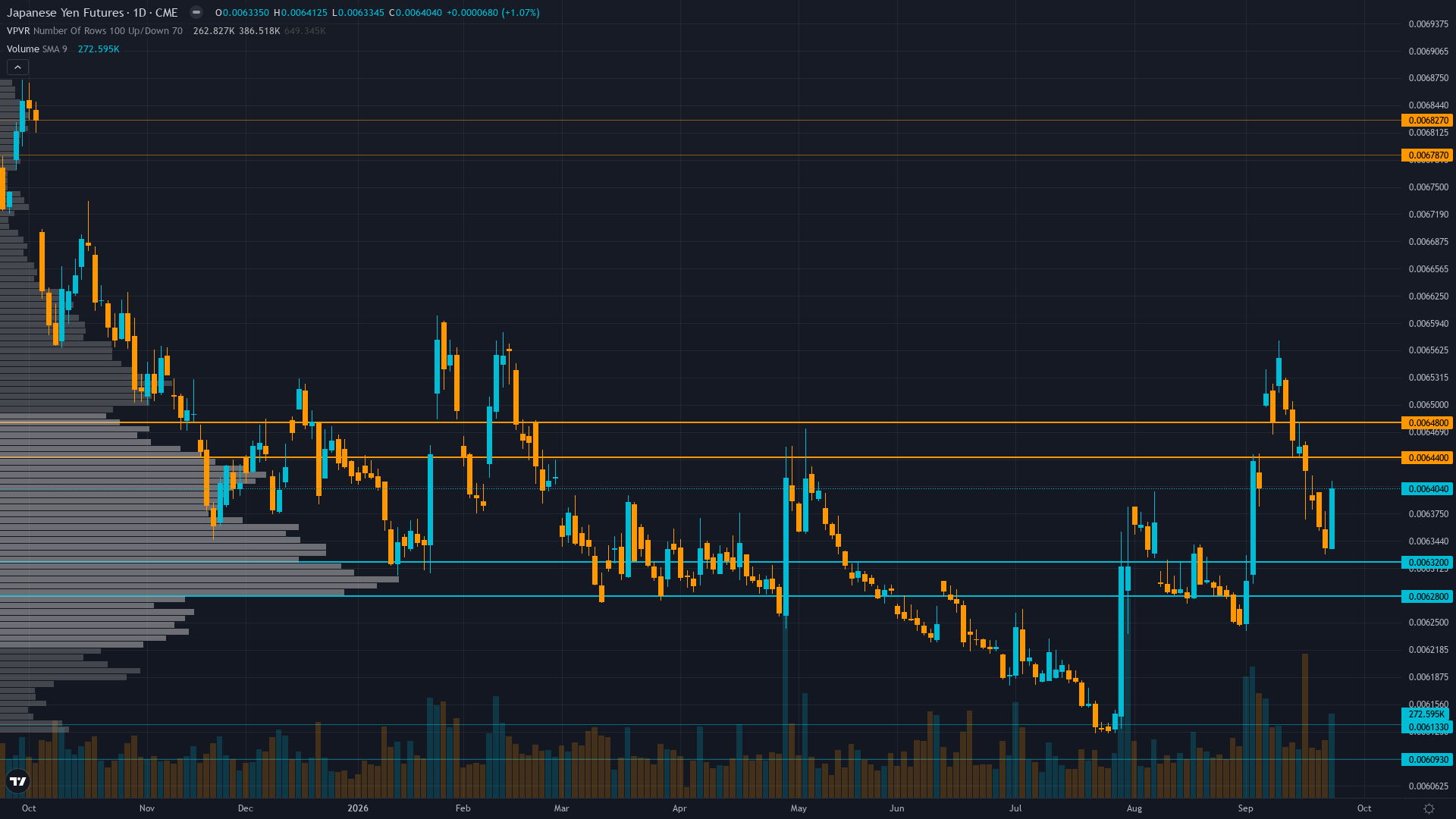
NO CALL | — | 0.006128 | 0.00632 | 3.13 | — | — |
| NO CALL for the twentieth consecutive week, and the yen surged 3.13%, the largest weekly FX move on the entire board by a considerable margin. The BoJ met July 30 within the grading window and apparently delivered something the market had not fully priced. A 3.13% FX move on a NO CALL is the kind of miss that makes the noise threshold framework look less like discipline and more like a policy of permanent abstention on the world's most dramatic currency pair. | |||||||
|
GBP/USD
EXTENDED
|
NO CALL | — | 1.3321 | 1.3475 | 1.16 | — | — |
| NO CALL for the twentieth consecutive week, and sterling rallied 1.16%. The BoE met July 30 within the grading window, and the pound rallied through the announcement. Another meaningful FX move the desk missed from behind the noise threshold barrier. Twenty weeks. Five months. The desk and cable have now been estranged longer than some marriages. | |||||||
|
Copper
EXTENDED
|
BULLISH | 7/10 | 6.36 | 6.526 | 2.61 | CORRECT | A |
| BULLISH at 7/10 and copper surged 2.61% as the Chile winter storm supply thesis combined with China's Friday Politburo stimulus pledge to produce the desk's best call of the week. Two consecutive correct BULLISH calls now, and the supply deficit thesis continues to earn its keep when fresh physical catalysts are present. Best call on the board. | |||||||
|
Russell 2000
EXTENDED
|
BEARISH | 6/10 | 2946.9 | 2937 | -0.34 | CORRECT | C+ |
| This week's MOTW. BEARISH at 6/10 on the FOMC hawkish dissent thesis, and the Russell declined 0.34%. Direction correct, move negligible, eight consecutive correct calls now. See the full deep-dive above. The free report is on the Ghost site. | |||||||
|
AUD/USD
FULL DESK
|
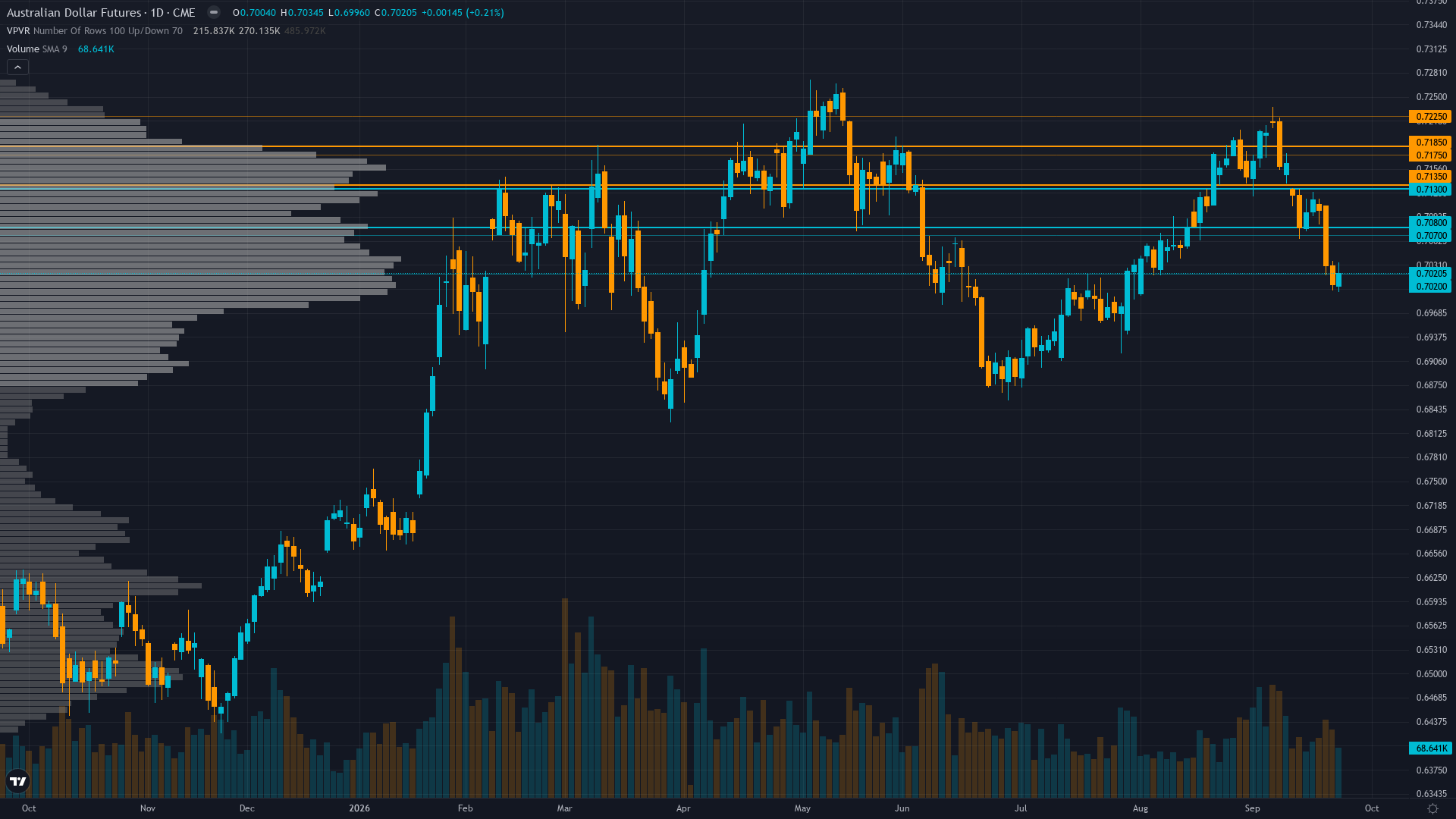
NO CALL | — | 0.6973 | 0.7029 | 0.8 | — | — |
| NO CALL per mandatory miss reset after three consecutive misses, and the Aussie gained 0.80%. The FOMC's hold and broad dollar weakness lifted the commodity currency, but the desk was procedurally locked out. The forced reset was appropriate given the recent miss history, even if the miss stings. | |||||||
|
30Y Treasury
FULL DESK
|
NO CALL | — | 109.53 | 108.75 | -0.71 | — | — |
| NO CALL at 5/10 with sub-threshold signal, and bonds fell 0.71%. The FOMC's 9-3 hawkish fracture pushed yields higher through the week, and the desk's long-running bearish bond conviction would have delivered yet again had it been active. The consecutive miss streak that forced the desk to minimum signal kept it out of what was effectively a free win. | |||||||
|
Wheat
FULL DESK
|
NO CALL | — | 679 | 638 | -6.04 | — | — |
| NO CALL at 5/10 with a mild bullish lean, and wheat collapsed 6.04%. After last week's BULLISH at 7/10 delivered an 8.35% explosion for the A+ MOTW, the desk reduced to near-neutral and the market fell off a cliff in the opposite direction. A 6% move on a NO CALL is the largest agricultural abstention miss in weeks. The desk's wheat record remains the definition of erratic. | |||||||
|
Soybeans
FULL DESK
|
NO CALL | — | 1252.5 | 1188.25 | -5.13 | — | — |
| NO CALL per mandatory miss reset after three consecutive misses, and soybeans crashed 5.13% from their two-year breakout highs. The war premium and weather risk that drove the prior weeks' rally apparently exhausted themselves. A 5.13% crash on a NO CALL is painful, though the mandatory reset after three straight misses was procedurally the correct response to a thesis that kept getting the timing wrong. | |||||||
|
✦ Best Call: Copper (HG)
BULLISH at 7/10 and copper gained 2.61% from $6.36 to $6.526 as the Chile winter storm supply disruption and China's Friday Politburo stimulus announcement provided a double catalyst. The Rio Times confirmed copper jumped 2.58% on Friday alone as China pledged fresh fiscal support for manufacturing. After the bruising June saga where I documented the desk 'chasing its own tail' between bullish and bearish calls, copper has now quietly strung together two consecutive correct BULLISH calls. The desk identified the July 14 Chile winter storm and July 20 China import surge to nine-month highs as fresh physical tightness catalysts that the market had not fully priced. The Politburo announcement on Friday validated that thesis with force. |
⚠️ Worst Call: Nasdaq 100 (NQ)
BEARISH at 6/10 and the Nasdaq gained 0.39%. The move was small enough that calling it a miss feels generous to both sides, the market equivalent of a polite disagreement at a dinner party. The desk's thesis about the 25% FOMC hike probability creating downside for duration-sensitive tech at 30.38x P/E had merit on Wednesday, when the Nasdaq fell 1.74% after the 9-3 vote. But the Friday recovery on China stimulus and late-week mega-cap earnings erased the midweek damage. The NQ saga continues: after months of NO CALL abstentions that I criticised relentlessly, the desk finally committed bearish and the market said 'not quite.' At least the miss was microscopic. |
The Fundamental agent earned its keep on copper this week, where its identification of the Chile winter storm supply disruption and China import surge to nine-month highs with Yangshan premium at $115/ton drove the correct BULLISH call at the desk's highest conviction. Five of six disciplines agreed on copper, and the market delivered 2.61%. That is the Fundamental agent doing what it does best: reading physical supply-demand tightness when the evidence is fresh and tangible.
The Economic agent had a mixed week across markets. On RTY, its mild bearish lean on the transitional macro regime with FOMC binary risk proved directionally correct. On NQ, the same agent called BULLISH at +2.3, the strongest bullish signal on the board, citing AI capex support and July 29 FOMC catalyst, and it was wrong as the index gained just 0.39% against the desk's bearish override. When the Economic agent is the strongest bullish voice and the synthesis overrides it to go bearish, and the market barely moves either way, neither the agent nor the override can claim vindication.
The FOMC's 9-3 vote has reset the macro landscape heading into August. Three dissenting members wanted a hike, and the bond market has already begun pricing heightened probability of a September rate increase. The BoJ's July 30 rate decision, which fell within this week's grading window and produced a 3.13% yen move the desk missed entirely, will dominate FX positioning into early August. Soybeans crashed 5.13% on what appears to be a dramatic unwind of the war and weather premium, and wheat collapsed 6.04%. The August 12 WASDE looms as the next agricultural catalyst. Mega-cap tech earnings from Apple, Amazon, Microsoft, and Meta all reported within or around this week's window, and their implications for NQ's trajectory will filter through next week's positioning. The desk will have its Sunday views. Given the FOMC clarity now in hand, I expect the NO CALL count to decrease as the binary event risk the agents were hedging against has resolved.