Mon-T Weekly Review — w/e 27 Mar 2026
Every bearish call on the board, a coin-flip scorecard, and gold's worst week since 1983 finally gets the MOTW it deserves.


There is a certain grim symmetry to a week in which the desk calls BEARISH on every single directional market and then watches half of them go the other way. Ten directional calls, all bearish, five correct. Fifty percent. The statistical equivalent of flipping a coin, except the coin had a thesis about hawkish Fed policy and oil-driven inflation fears, and half the markets didn't care.
The backdrop was biblical. Gold continued its worst monthly decline since 1983, finishing down another 1.86% to land at $4,489. FX Leaders reported the metal has now crashed 21% from its January all-time high. The S&P 500 shed 2.45%, its fifth consecutive losing week, with The Motley Fool asking whether both the S&P and Nasdaq were heading into correction territory. Crude oil, meanwhile, refused to cooperate with the desk's bearish premium-exhaustion thesis, rallying 3% as CNBC reported WTI closed at its highest since 2022 after Iran rejected peace talks. And the Nasdaq, on which the desk issued a NO CALL, promptly dropped 3.52% in what amounts to the largest single-week move the desk has refused to call since the February tech selloff.
Five correct from ten directional calls is the desk's worst directional accuracy since the 46.7% horror show of w/e 6 Mar, the week Iran changed everything. The saving grace, if you can call it that, is that the correct calls landed on markets that matter: gold, bonds, the S&P, soybeans, and platinum all went down as called. But crude's 3% rally against a bearish call at 6/10 confidence, silver's refusal to fall despite a conviction-6 bearish stance, and copper's surprise rebound all demonstrate that the post-FOMC regime shift the desk identified has not produced the clean directional resolution the agents expected.
|
15
Markets
|
10
Directional
|
5
Correct
|
50%
Accuracy
|
5
No Calls
|
Ten directional calls this week, every single one bearish, with five landing on the right side. The other five markets got the NO CALL treatment. A 50% hit rate is, to use a technical term, not great. The average confidence of 5.3 is the lowest I have ever recorded on directional calls, which tells you the agents themselves had minimal conviction. When your entire board is bearish at minimum conviction and you still only hit half, the question becomes whether issuing ten low-confidence directional calls was any better than issuing five NO CALLs and five low-conviction views.
The confidence calibration tells a mixed story. The two highest-conviction directional calls, crude oil and silver at 6/10 each, both missed. ES at the lowest recordable confidence still delivered a 2.45% decline. Gold's bearish call at 6/10 was correct with a 1.86% drop. When your lowest-confidence calls outperform your highest-confidence ones, the system is telling you something about its own reliability in this regime.
|
63/111
Correct / Total
|
56.8%
Accuracy
|
111 / 52
Directional / No Call
|
The rolling twelve-week figure sits at 56.8% across 111 directional calls, with 52 no-call abstentions. This week's 50% performance drags the average down slightly from last week's 54.4%. The engagement rate shows the desk calling direction on roughly two-thirds of market-weeks over the trailing window, which is reasonable discipline. The rolling number has been stubbornly lodged in the 54-58% range since early March, and this week's coin-flip result does nothing to break it free. Strip out the wartime volatility weeks and the number looks materially better, but we do not get to choose which weeks count.
|
Bias Called
BEARISH
|
Confidence
6/10
|
Result
CORRECT
|
Grade
B+
|

| Monday Open | 4574.9 |
| Friday Close | 4489.7 |
| Move | -1.86 |
| ▼ R2 | 5000 |
| ▼ R1 | 4750 |
| ▲ S1 | 4450 |
| ▲ S2 | 4300 |
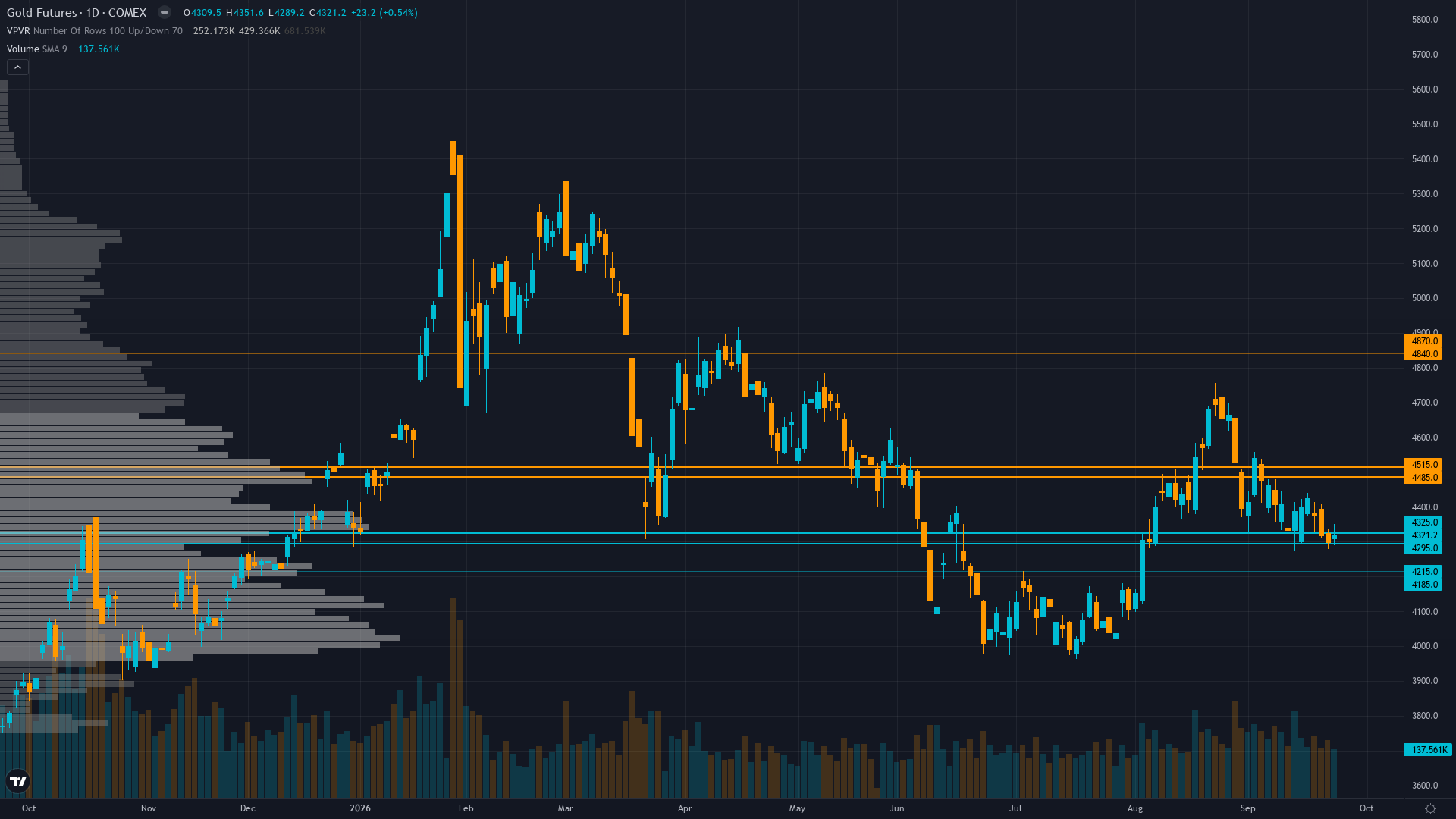
S1 at $4,450 was the gravitational centre of the week. Gold opened Monday at $4,574.9, already well inside the $4,450-$4,750 range the desk mapped, and spent most of the week grinding lower toward that S1 support. Friday's close at $4,489.7 settled roughly $40 above S1, suggesting the level is acting as genuine support for now. R1 at $4,750 was never seriously threatened. The prior $5,000 psychological level, now marked as R2, belongs to a different era. FX Leaders confirmed gold has crashed 21% from the January $5,626 all-time high, and CBS News reported gold at $4,433 on March 27, which if that represented intraday action means S1 at $4,450 was briefly breached before a Friday recovery. S2 at $4,300, the 200-day moving average zone, was not tested this week but remains the obvious next target if selling resumes. The levels framework bracketed the week's action well.
The called edge was that the market was underestimating the depth of central bank demand deterioration, with January buying collapsing 81% to just 5 tonnes versus the 27-tonne monthly average, while retail remained stubbornly 83% long. The desk argued this created a structural sell setup as the hawkish Fed removed the rate-cut tailwind. FinancialContent confirmed on March 27 that 'precious metals plunge as Fed's hawkish turn collides with geopolitical inflation,' validating the thesis that the FOMC's dot-plot revision to just one 2026 cut was the dominant price driver. The edge identification was sound. The market priced gold for a dovish pivot that never arrived, and the desk correctly identified that the geopolitical safe-haven narrative, which kept failing to support gold during the March 19 flash crash, would continue to disappoint. Finance Magnates ran a piece titled 'Why Is Gold Crashing?' confirming the desk's thesis that rising real yields and dollar strength were structural headwinds rather than temporary noise.
All six discipline biases pointed BEARISH, one of the rare weeks of complete unanimity on a single market. The Economic agent carried the heaviest weight at 30% and earned it, correctly identifying the FOMC hawkish hold as the dominant macro driver. Its framework around the Fed's impossible dilemma, where oil-driven inflation prevents easing while the labour market softens, proved to be the correct analytical lens. The Fundamental agent at 20% flagged the central bank demand collapse and rising real yields as structural headwinds, which was the week's sharpest specific insight. The Technical agent at 18% correctly identified the breakdown below $5,000 as regime change rather than noise. The Institutional agent at 22% read the managed money liquidation correctly. The Sentiment agent at 8% captured the extreme fear environment. The Options agent at 2% had insufficient data but was not needed when every other discipline agreed. When all six disciplines converge like this, the desk tends to get it right. This week, it did.
Gold earned its Market of the Week billing not through dramatic intraweek fireworks, but through the sheer historical weight of what has happened to the metal over the past five weeks. From $5,626 on January 29 to $4,489.7 on March 27 is a 20.2% decline, a move FinancialContent described as 'gold's worst week in 43 years' when the initial crash hit. The Middle East Insider reported gold down 23% from its record high, with DXY above 108 serving as the 'primary suppressor.' This is not a correction. This is a regime change in the gold market, and the desk correctly identified it.
The week's price action was relatively orderly compared to the March 19 flash crash that preceded it. Gold opened Monday at $4,574.9 and ground lower through the week, settling at $4,489.7 on Friday for a 1.86% decline. The MOTW report, published free on the Ghost site, laid out the bearish thesis with specific support and resistance levels and an edge identification centred on the collapse of central bank buying. That thesis proved correct. CBS News reported gold at $4,433 per ounce on March 27, suggesting intraday trading may have dipped below the desk's S1 at $4,450 before a late-week recovery pushed the futures close higher.
What makes this call particularly interesting is the timing problem the desk itself acknowledged. The narrative laid out in the synthesis data explicitly warned that 'issuing BEARISH now after the move has already occurred presents significant timing risk, classic late-to-the-trade positioning.' The desk called bearish anyway, with moderate conviction of 6/10 despite that self-identified risk, and was rewarded with another leg lower. The devil's advocate scenario, that the $4,450-$4,575 zone represented capitulation and a floor for bargain hunters, did not materialise. Gold kept grinding lower.
The structural damage is real. January central bank buying collapsed 81% to 5 tonnes versus the 27-tonne monthly average. The Fed's dot plot now shows just one 2026 rate cut, with seven of nineteen participants expecting no cuts at all. CNBC reported on March 27 that markets now see the Fed's next move as a potential rate hike, with 52% probability of an increase by year-end. That is a complete inversion of the rate-cut narrative that powered gold's rally to $5,626 in January, and the desk identified this shift before the market fully priced it.
The one honest caveat: the B+ grade rather than an A reflects that the move was modest at 1.86%, the confidence was tempered at 6/10 because the desk acknowledged its own timing risk, and the levels while accurate were not tested with the kind of surgical precision that earns top marks. This was a good call on the right market at the right time, made with appropriate caution given the desk's recent miss history on gold. The full MOTW report on the Ghost site has the complete analysis.
| Market | Bias | Conf. | Mon Open | Fri Close | Move | Result | Grade |
|---|---|---|---|---|---|---|---|
|
S&P 500
CORE
|
BEARISH | 5/10 | 6559 | 6398 | -2.45 | CORRECT | A |
| BEARISH at 5/10 and the S&P shed 2.45% for its fifth consecutive losing week. The Motley Fool ran a piece asking whether both the S&P and Nasdaq were heading into correction territory, and the desk's stagflation thesis delivered once again. Three consecutive correct bearish weeks on ES now. The best call on the board this week. | |||||||
|
Crude Oil
CORE
|
BEARISH | 6/10 | 98.23 | 101.18 | 3 | MISSED | D |
| BEARISH at 6/10, the joint-highest directional conviction on the board, and crude rallied 3% to close at $101.18. CNBC reported WTI settled at its highest since 2022 as Iran rejected peace negotiations. The geopolitical premium exhaustion thesis lasted exactly one week before the war reminded everyone it is very much not over. The worst call on the board. | |||||||
|
Gold
CORE
|
BEARISH | 6/10 | 4574.9 | 4489.7 | -1.86 | CORRECT | B+ |
| This week's MOTW. BEARISH at 6/10 and gold fell another 1.86%, extending its worst decline since 1983. Finance Magnates is running 'Why Is Gold Crashing?' explainers. See the full deep-dive above. The free report is on the Ghost site. | |||||||
|
EUR/USD
CORE
|
NO CALL | — | 1.1571 | 1.15505 | -0.18 | — | — |
| NO CALL at 5/10 on a trivial 18-pip drift lower. The euro went nowhere, and the desk said nothing. The FX noise-threshold discipline continues to earn quiet points on pairs that refuse to move. | |||||||
|
Nasdaq 100
CORE
|
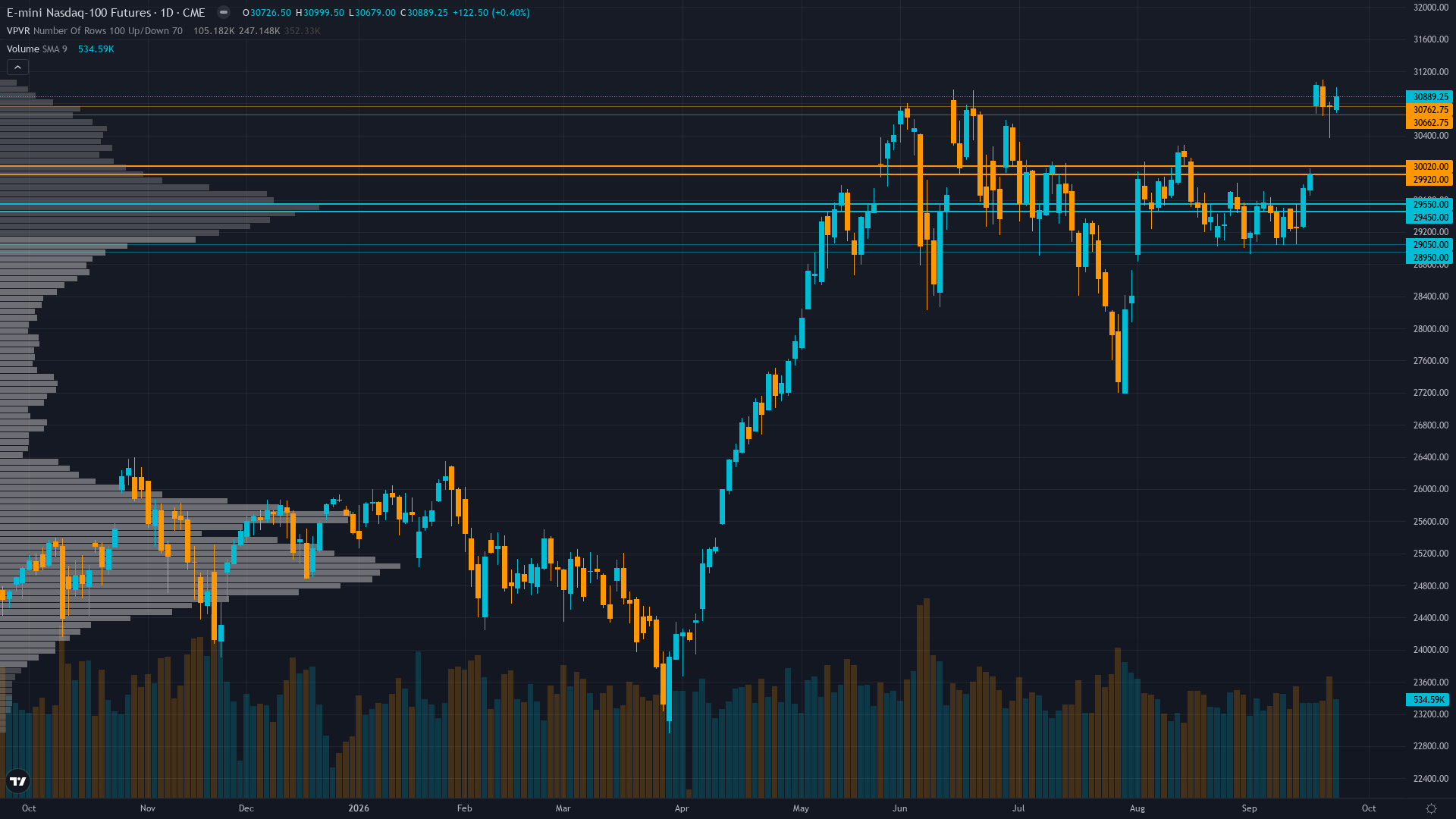
NO CALL | — | 24101.5 | 23254.25 | -3.52 | — | — |
| NO CALL at 5/10 and the Nasdaq crashed 3.52%. The seventh consecutive week of NQ assessment by the desk, and the first time in this sequence where sitting on the sidelines truly stings. A 3.52% move is the kind of thing a prediction desk exists to catch. I said exactly this when NQ dropped 3.14% in early February and the desk issued NO CALL. Same problem, different month. | |||||||
|
Silver
EXTENDED
|
BEARISH | 6/10 | 69.66 | 69.77 | 0.16 | MISSED | D |
| BEARISH at 6/10, the joint-highest conviction this week, and silver barely moved, gaining 0.16%. After three weeks of apocalyptic selling that took the metal from $81 to $67, silver simply stopped. The desk's thesis about further downside to $64-67 did not materialise. Sometimes the rubble stops bouncing. | |||||||
|
USD/JPY
EXTENDED
|
NO CALL | — | 0.006327 | 0.0062805 | -0.73 | — | — |
| NO CALL at 5/10, the yen strengthened 0.73%. With fiscal year-end repatriation flows approaching March 31, the yen move was in the direction the desk's own narrative flagged as probable but lacked the conviction to call. A miss that could have been a win with slightly more courage. | |||||||
|
GBP/USD
EXTENDED
|
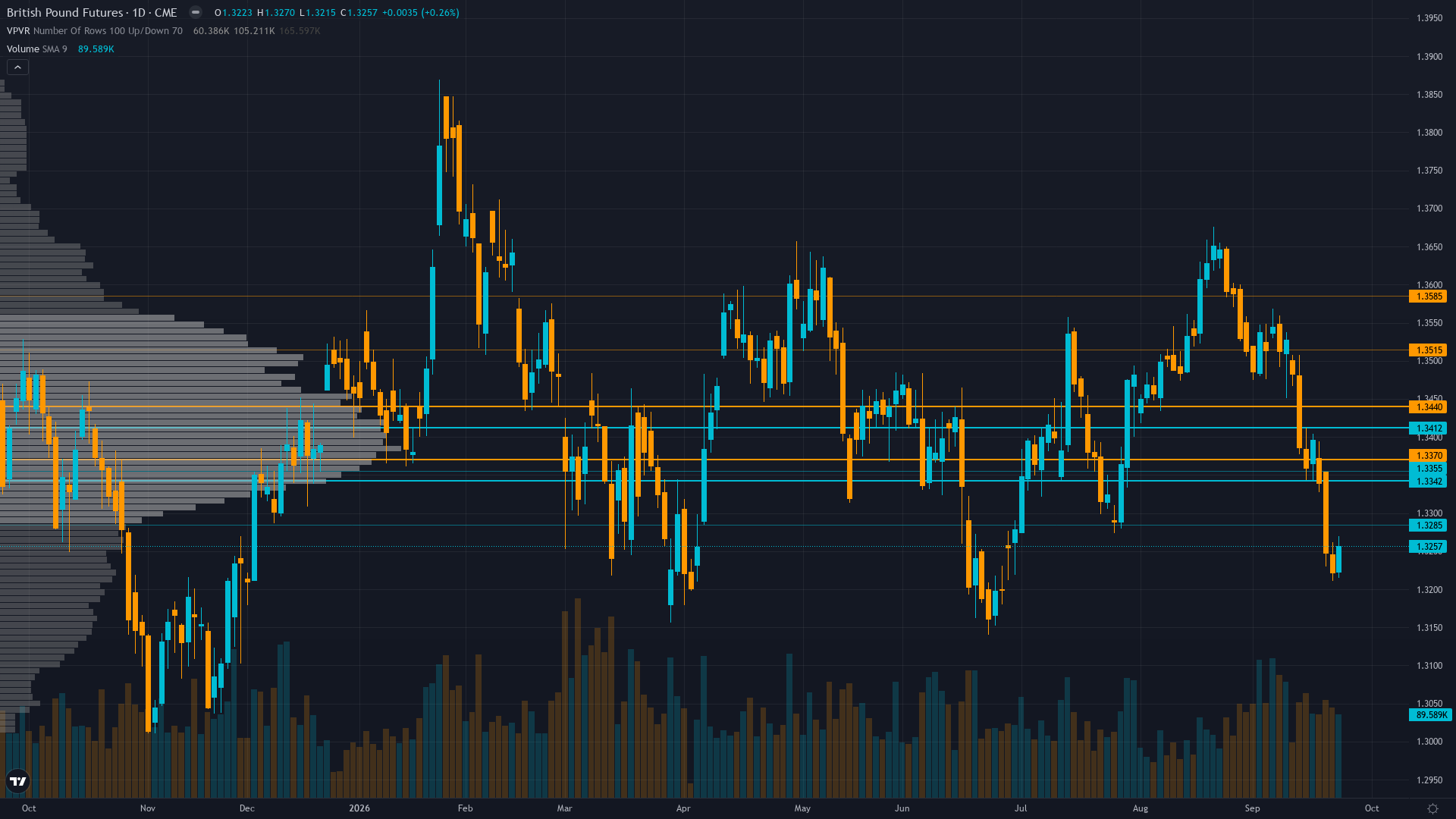
NO CALL | — | 1.3317 | 1.3259 | -0.44 | — | — |
| NO CALL at 5/10 on a 44-pip decline. Sterling drifted lower within the noise threshold, and the desk's mandatory reset after two consecutive misses kept it sensibly on the sidelines. The discipline continues to protect the scorecard on cable. | |||||||
|
Copper
EXTENDED
|
BEARISH | 5/10 | 5.3745 | 5.4615 | 1.62 | MISSED | D |
| BEARISH at 5/10 on the back of LME inventories surging to a September 2019 high, and copper rallied 1.62%. After ten consecutive bullish weeks followed by a NO CALL that missed a 7.79% collapse, then a bearish flip that the market promptly rejected. Copper has become the desk's least predictable market since the Iran war began. | |||||||
|
Russell 2000
EXTENDED
|
BEARISH | 5/10 | 2455 | 2456 | 0.04 | MISSED | D |
| BEARISH at 5/10 and the Russell finished the week virtually unchanged at +0.04%. The desk called bearish into what turned out to be a flatliner. A move of 4 basis points on a weekly basis is the market's way of saying 'no comment.' The extreme sentiment capitulation at VIX 26.78 and AAII 52% bears created exactly the floor the desk acknowledged but bet against. | |||||||
|
AUD/USD
FULL DESK
|
NO CALL | — | 0.7061 | 0.68695 | -2.71 | — | — |
| NO CALL at 5/10 and the Aussie crashed 2.71%, the largest weekly move on the entire FX board. After last week's BULLISH miss at 7/10, the desk retreated to NO CALL per its integrity rules. The RBA's narrow 5-4 vote split apparently provided no floor whatsoever. A 2.71% FX move on a NO CALL is a painful miss by any standard. | |||||||
|
30Y Treasury
FULL DESK
|
BEARISH | 5/10 | 114.09 | 112.41 | -1.48 | CORRECT | A |
| BEARISH at 5/10, bonds fell nearly 1.5 points. The MOVE index spiking 28% in 24 hours to 108.84 confirmed the volatility expansion the desk had warned about for eight consecutive weeks. Four consecutive correct bearish calls on ZB now. The desk's long-running bearish bond thesis, which survived that costly bullish detour in early March, is the most consistent performer in the entire portfolio. | |||||||
|
Wheat
FULL DESK
|
BEARISH | 5/10 | 595.25 | 605.75 | 1.76 | MISSED | D |
| BEARISH at 5/10 and wheat rallied 1.76%. The desk flipped bearish after last week's BULLISH miss, and wheat immediately reversed course. The late-March freeze risk the desk acknowledged as a tail scenario appears to have kept buyers engaged. Another week, another wrong-footed call on wheat. | |||||||
|
Soybeans
FULL DESK
|
BEARISH | 5/10 | 1168.5 | 1159.5 | -0.77 | CORRECT | B |
| BEARISH at 5/10 and soybeans fell 0.77%. The China trade uncertainty thesis following the Trump-Xi meeting postponement and Brazilian pricing advantage played out modestly. A small move in the right direction at low conviction. Solid if unspectacular. | |||||||
|
Platinum
FULL DESK
|
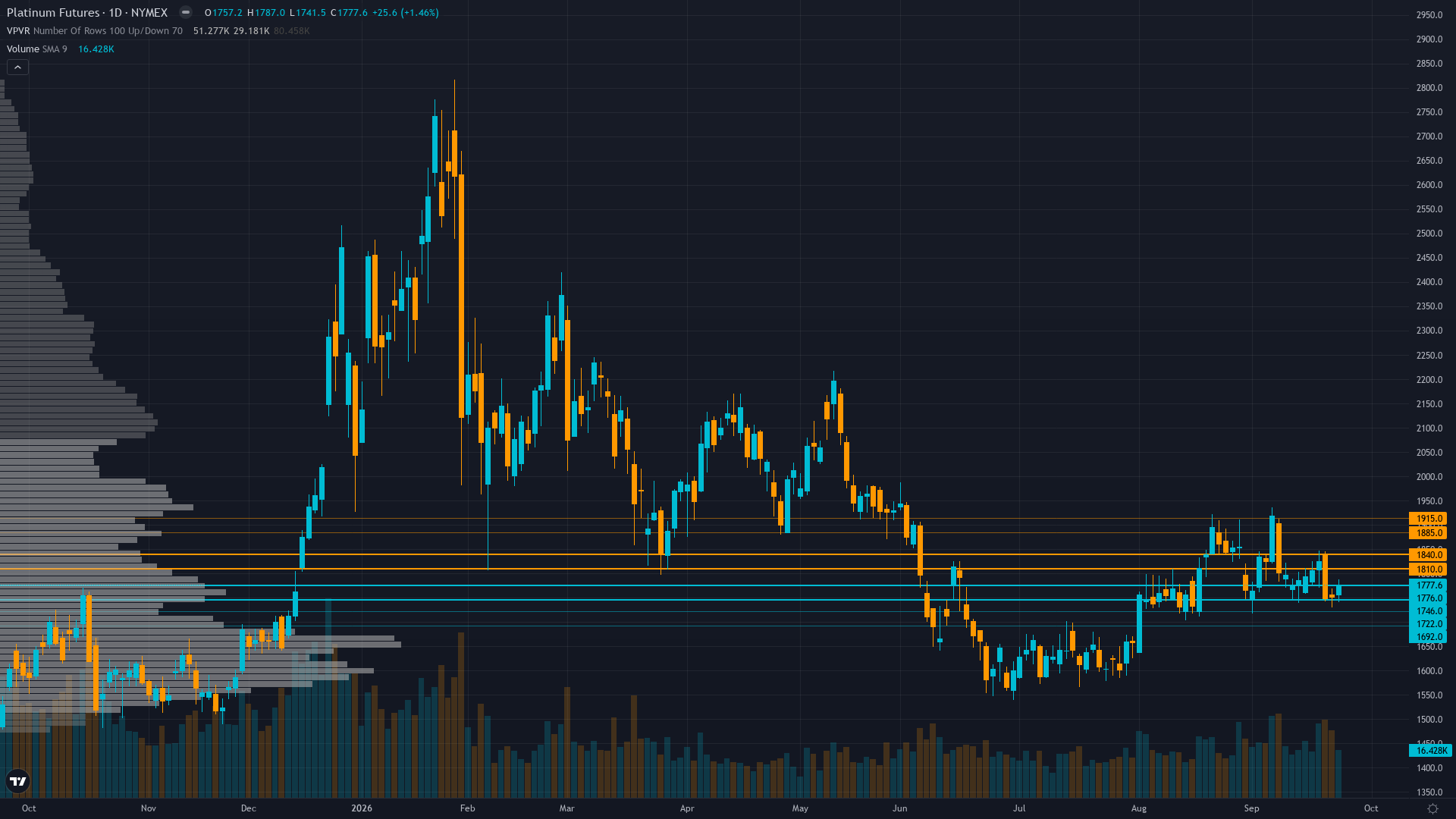
BEARISH | 5/10 | 1920.1 | 1866.4 | -2.8 | CORRECT | B+ |
| BEARISH at 5/10 and platinum fell 2.8%, extending its decline to 36% from the January $2,925 peak. The WPIC's 240,000-ounce deficit revision continues to be overwhelmed by the technical breakdown and hawkish Fed environment. Two consecutive correct bearish calls after months of painful bullish misses. The desk has finally learned to stop fighting the platinum tape. | |||||||
|
✦ Best Call: S&P 500 (ES)
BEARISH at 5/10 and the S&P collapsed 2.45%, its fifth straight losing week. Investopedia confirmed the indices finished about 2% lower, with the Dow surging 600 points on Monday's Iran talk optimism before the selling resumed. The desk's stagflation thesis, now in its third consecutive correct week on ES, continues to be the most reliable framework on the board. The S&P closed at 6,398, well below the called S1 at 6,520, meaning the desk's support level was breached with authority. Three consecutive correct bearish calls on ES is a streak worth respecting. |
⚠️ Worst Call: Crude Oil (CL)
BEARISH at 6/10 and crude rallied 3%. CNBC reported WTI closed at its highest level since 2022 at $99.64 per barrel as Iran rejected peace talks and the Strait of Hormuz crisis entered its fourth week. The desk's geopolitical premium exhaustion thesis, which worked for exactly one week on the prior MOTW call, has been firmly rejected by a market that refuses to believe the war is priced. When Wikipedia has an entire article titled '2026 Strait of Hormuz crisis' describing the largest oil supply disruption in modern history, calling bearish on crude at $98 requires a certain bold confidence in mean reversion that the market evidently does not share. |
The Economic agent continued its strong run, correctly driving the bearish thesis on ES, ZB, GC, and ZS through the stagflation-policy-paralysis framework. Its identification of the Fed's hawkish hold as the dominant macro force remains the most useful analytical lens across asset classes. The Fundamental agent also performed well on gold and platinum, where the structural demand deterioration and technical breakdown theses played out.
The weakest collective performance came from the commodity-specific disciplines on crude oil, copper, and silver, where the agents' bearish theses were overwhelmed by wartime supply dynamics and positioning squeezes. The crude oil miss is particularly telling: the desk's Fundamental agent gave it a 30% weighting and identified structural oversupply, while the war created a binary event risk the models simply cannot price. Copper's 1.62% rally against a bearish call highlighted the same problem, as LME inventory data that should have been bearish was overwhelmed by China demand optimism. The Sentiment agent's contribution was minimal across all markets, adding noise rather than signal in an extreme-fear regime where contrarian indicators have stopped working.
The March 31 quarter-end looms three days away, bringing mechanical rebalancing flows that could create temporary dislocations across equities and bonds. The February PCE inflation data drops on March 28, a potentially market-moving print given CNBC's report that markets now price a 52% probability of a Fed rate HIKE by year-end. If PCE confirms the inflation reacceleration the dot plot warned of, gold's decline likely accelerates toward $4,300 and bonds face another leg lower. The Iran conflict continues to dominate crude, where the desk's bearish thesis has now been wrong for two of the last three weeks. April brings the ISM Manufacturing PMI on April 1, the March jobs report on April 3, and the April WASDE on April 9, a wall of catalysts that should finally give the agents something to work with beyond 'everything is bearish at minimum conviction.' The desk will have its Sunday views. I expect a more differentiated set of calls than this week's wall of bears.