AUD/USD COT & Institutional Positioning — Smart Money Analysis
AUD/USD institutional positioning: COT data, sentiment analysis and smart money flow assessment.

Where Institutions Stand
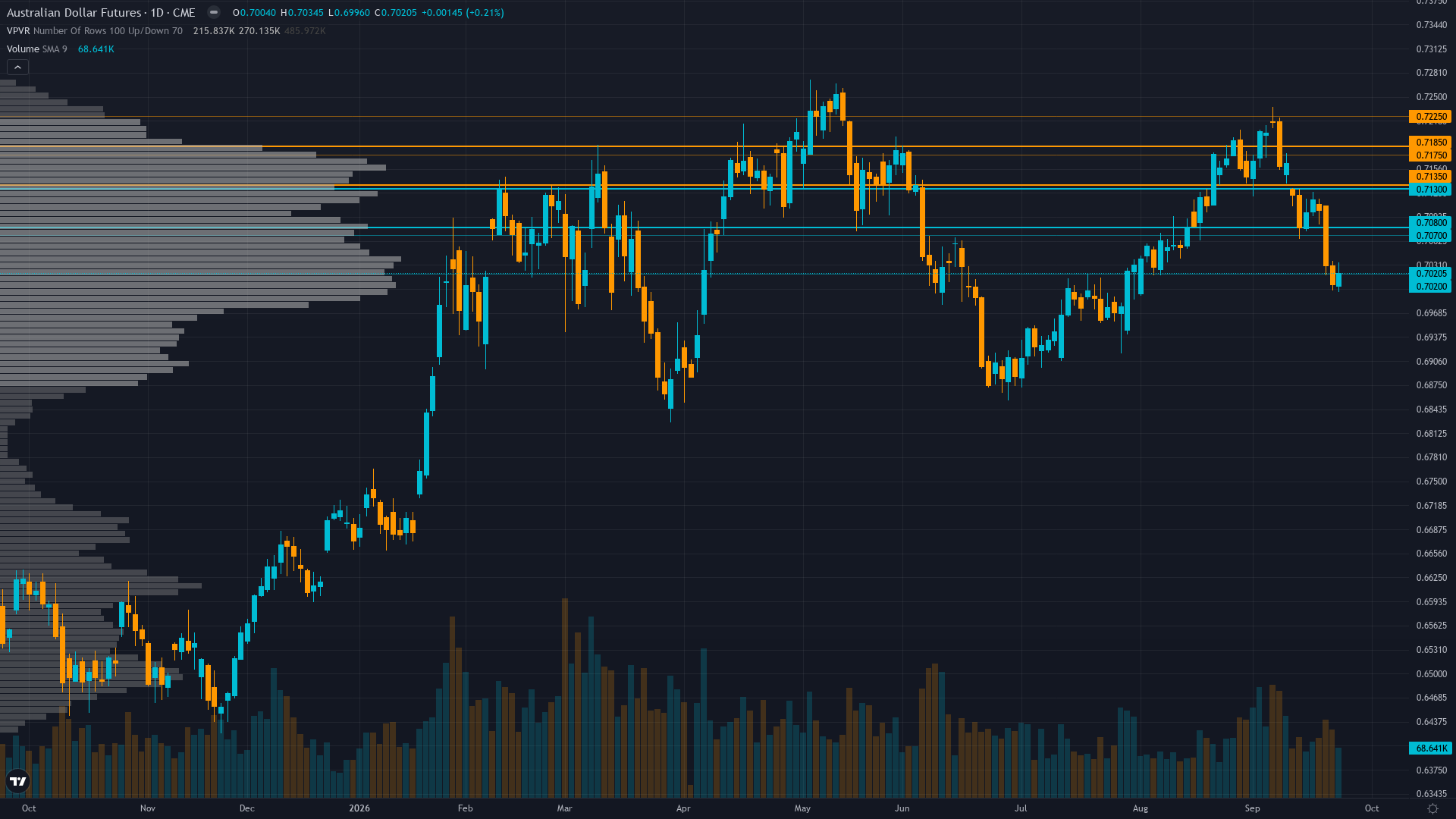
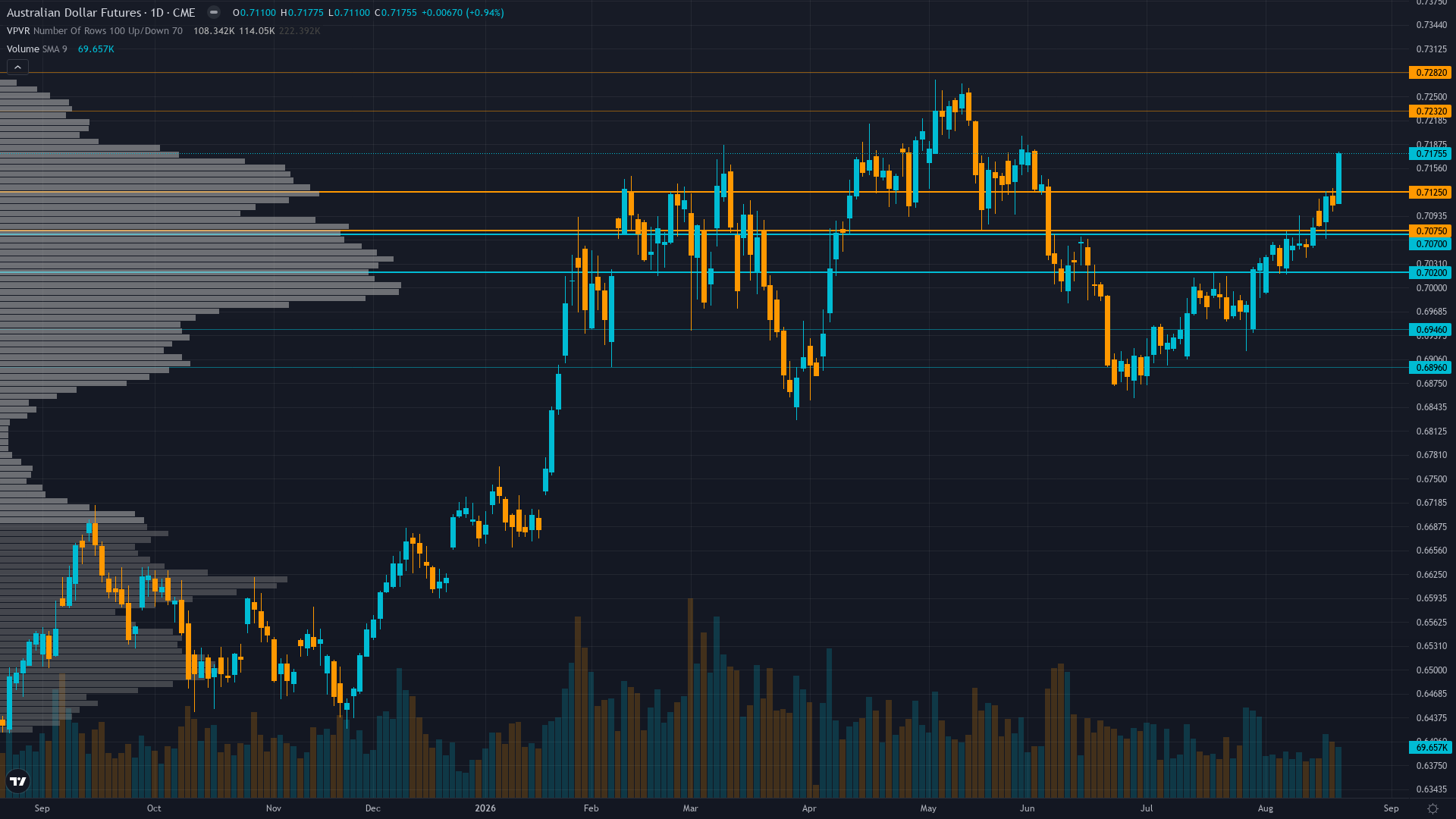
Trading at 0.7175 with a 0.87% uptick, AUD/USD is drifting higher without strong conviction.
COT net shorts -44,159 contracts as of Aug 18 (59.5th percentile 3-year), worsening by -4,936 contracts despite AUD rallying 1.32% in the week — speculative shorts are adding into a rising market, creating squeeze risk but also suggesting smart money sees topside exhaustion
Consensus vs MAD View
Market consensus: Market consensus cautiously bullish on AUD supported by USD weakness, the 72bp RBA rate advantage, and elevated iron ore prices, with AUD approaching 52-week highs at 0.7257 and trading near the 90th percentile of its 1-year range
Primary driver: USD weakness from US Treasury bond buyback announcement on Aug 21, 2026, which weakened the dollar broadly and pushed AUD through 0.7150 resistance toward 0.7175 — the primary catalyst is external (USD-driven) rather than AUD-specific fundamental strength
Where the Crowd May Be Wrong
Mild divergence: the desk sees bullish structural forces (RBA policy advantage at 72bp, AUD undervaluation, squeeze risk from -44K net shorts) aligned with market consensus on AUD strength, but flags deteriorating domestic labor market conditions and declining terms of trade that the bullish consensus appears to be underweighting in the current USD-weakness-driven rally
Crowd Psychology
Neither side has committed heavily to aussie dollar, leaving sentiment in a neutral zone that offers little directional guidance on its own.
Options Flow
No actionable options data — 6A options market too thinly traded for reliable IV, put/call ratio, or skew analysis this cycle
The Bottom Line on Positioning
The positioning mosaic for aussie futures combines neutral sentiment with stable volatility conditions. Trend strength registers at 6/10, suggesting meaningful but not extreme directional bias. Taken together, institutional behaviour, crowd psychology, and derivatives data frame the setup heading into the new week.
This analysis covers one dimension. Our full weekly report combines six specialist agents into a single actionable briefing with directional bias, key levels, and risk-opportunity matrix.
Start Free — Get the Market of the WeekFree weekly report · No credit card · Upgrade anytime