Soybeans (ZS) — Post-Q1 earnings consolidation with strong fundamentals offset by stretched…
Analysts remain bullish with Buy consensus and $320 average target but near-term price action suggests profit-taking and valuation concerns tempering enthusiasm

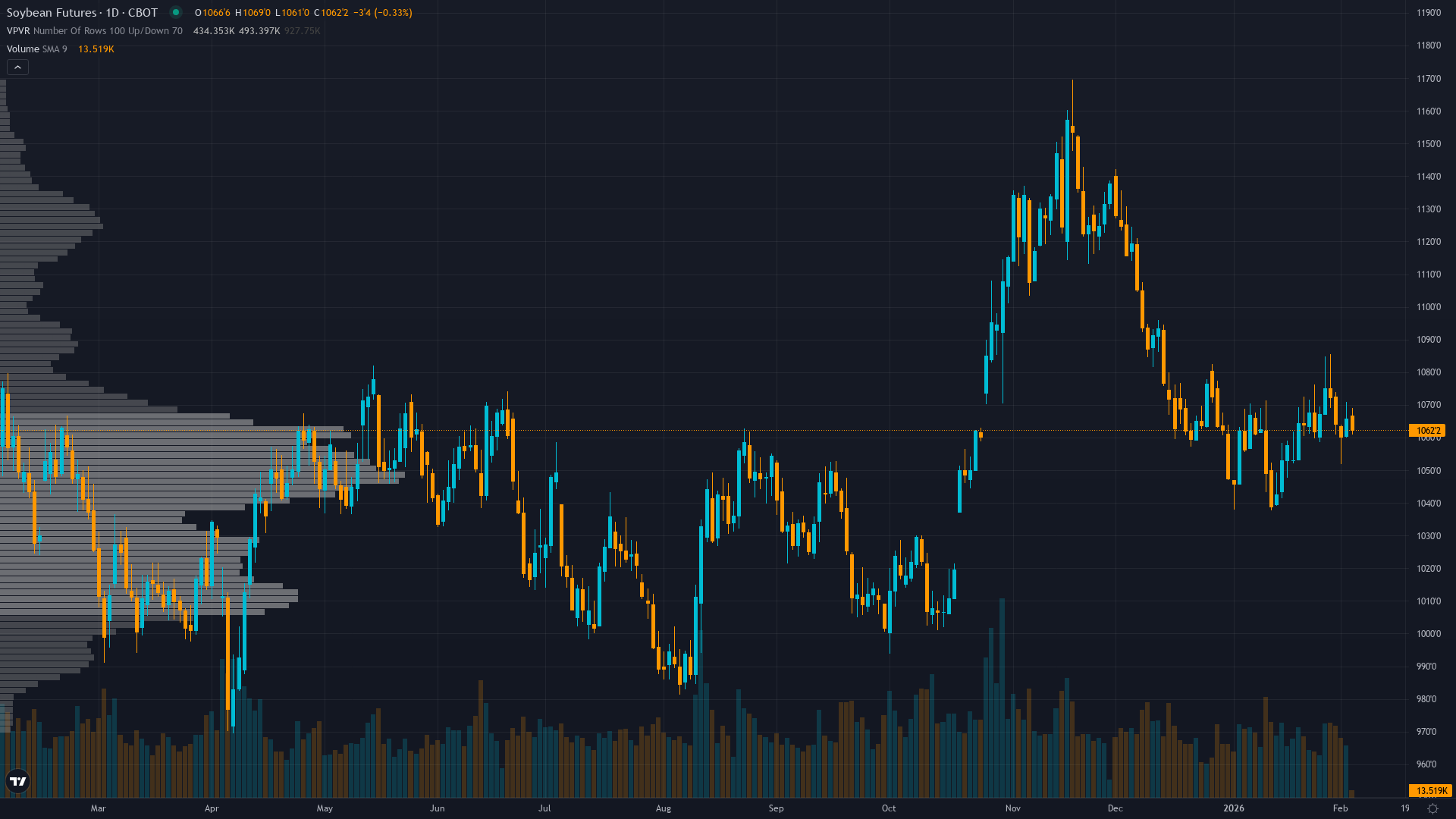
Analysts remain bullish with Buy consensus and $320 average target but near-term price action suggests profit-taking and valuation concerns tempering enthusiasm
Post-Q1 earnings consolidation with strong fundamentals offset by stretched valuation near $210 after 90% EPS beat
Upcoming Q2 FY2026 earnings on February 19 creating event risk with consensus EPS $0.90 vs prior $0.96 beat
AI Security Suite launch and 91% YoY AI traffic surge positioning ZS as Zero Trust leader for enterprise AI adoption
| ▲ Resistance Zone 2 | 235.00 – 245.00 |
| ▲ Resistance Zone 1 | 212.00 – 222.00 |
| ─ Pivot Area | ~208.91 |
| ▼ Support Zone 1 | 195.00 – 205.00 |
| ▼ Support Zone 2 | 175.00 – 185.00 |
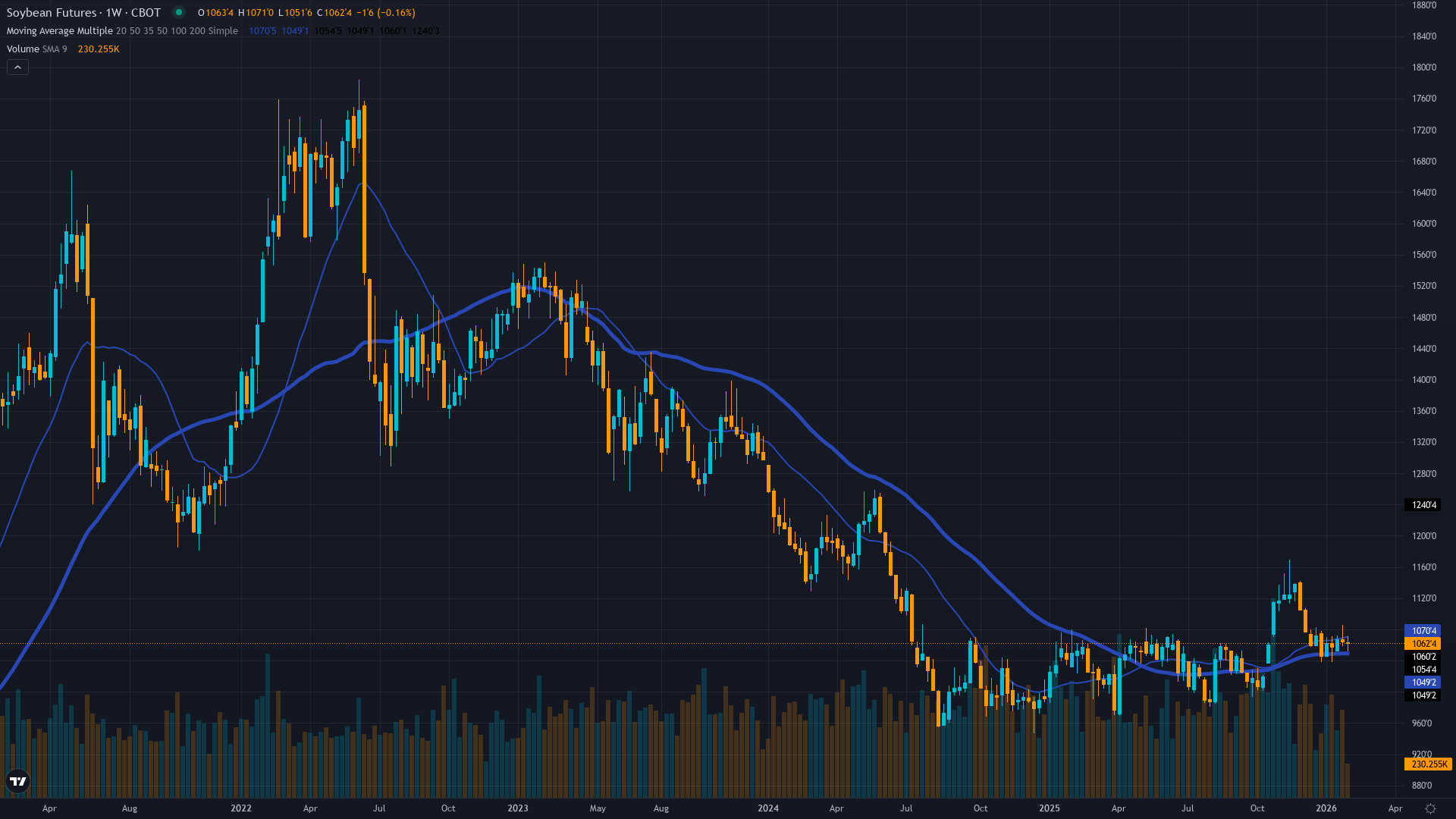
Consolidating in $200-217 range below 50-day MA $292 and 200-day MA $304 after sharp post-earnings decline from November highs
Q1 FY2026 beat with EPS $0.96 vs $0.50 est but stock sold off 10% post-earnings on valuation concerns despite 23% revenue growth guidance
39 analysts with Buy rating and $320.64 average target implies 50% upside but stock down 38% from 52-week high of $337
Implied volatility declining from post-earnings peaks with put bias remaining elevated reflecting downside concerns ahead of Q2 earnings
Strong cybersecurity spending driven by 91% YoY AI/ML adoption surge and Zero Trust architecture proliferation supporting structural demand
Normal with short-term vol below longer-term as post-earnings uncertainty dissipates but longer-term uncertainty around competitive positioning and macro remains elevated
High-growth SaaS names like ZS typically show volatility compression post-earnings followed by gradual expansion as next catalyst approaches, with 65% probability of vol remaining in 35-45% range until late January then expanding to 50-60% by mid-February
Volatility likely to remain subdued for 2-3 weeks until Q2 earnings approach in mid-February when event risk premium builds into options market
Current volatility suggests $3-5 daily ranges versus normal $2-3, with consolidation likely to produce whipsaws and false breakouts requiring patience for directional conviction
Moderate vol environment suggests 8-12% moves possible over next 3-4 weeks versus typical 5-7%, with balanced risk as downside to $180 support offset by upside to $240 resistance if earnings narrative strengthens
|
⚠️ Primary Risk
Valuation compression if Q2 guidance disappoints or competitive pressure from Microsoft/Palo Alto intensifies eroding market share Probability: MEDIUM
|
✦ Primary Opportunity
Rebound toward $240-260 if Q2 confirms acceleration in Zero Trust and AI Security platform adoption driving ARR growth Timeframe: 3-4 weeks leading into and following February 19 Q2 earnings
|
Zscaler trades at $210.50 on February 1, 2026, consolidating in a $200-217 range following a volatile post-earnings period. The company delivered exceptional Q1 FY2026 results on November 25, 2025 with EPS of $0.96 crushing consensus of $0.50 (92% beat) and guiding Q2 revenue to $797-799M (23% YoY growth). However, the stock paradoxically declined 10% post-earnings to current levels, reflecting classic 'sell the news' dynamics and investor concerns about valuation at stretched multiples. The stock now trades 38% below its 52-week high of $337 reached in 2025, presenting a critical inflection point.
The fundamental narrative remains compelling: Zscaler's January 2026 ThreatLabz report documented a stunning 91% YoY surge in AI/ML activity across 989 billion transactions from 9,000 organizations, with enterprise data transfers to AI apps reaching 18,033TB (93% increase). The company launched its AI Security Suite targeting this massive adoption wave, positioning itself as the Zero Trust security layer for AI-heavy enterprises. Recent leadership additions including Sunil Frida as CMO (December) and Swamy Kocherlakota as EVP of Agentic AI Security Engineering (January) signal aggressive investment in AI-driven capabilities.
The analyst community remains constructive with 39 Buy ratings and average $320.64 price target (50% upside), though recent downgrades include Bernstein initiating at Market Perform with $264 target on December 1. Technical structure shows weakness with the stock trading below both 50-day MA ($292) and 200-day MA ($304), though the $200 psychological level has provided consistent support through January. The 52-week range of $164.78 to $336.99 suggests significant two-way volatility remains possible.
The cybersecurity sector backdrop is exceptionally favorable with WEF's 2026 Global Cybersecurity Outlook highlighting accelerating AI adoption, geopolitical fragmentation, and sophisticated phishing as key threat drivers. The cloud security market projects 20.7% CAGR through 2035, with Zero Trust architecture becoming table-stakes for enterprise security. Zscaler operates at the nexus of these trends but faces intensifying competition from Microsoft (16% market share) and Palo Alto Networks in the SASE/SSE categories.
The near-term catalyst structure is clear: Q2 FY2026 earnings on February 19 will be critical for validating whether the Q1 beat represents sustainable momentum or peak performance. Consensus expects EPS $0.90 and revenue $797-799M, with scrutiny focused on ARR growth trajectory, billings acceleration, operating margin expansion, and management commentary on competitive dynamics. Valuation remains contentious with forward P/E stretched despite the correction, creating vulnerability to any guidance disappointment.
The seasonality is neutral-to-slightly-negative for tech stocks in Q1 calendar year, though cybersecurity has shown resilience. From a volatility perspective, the stock sits in the 58th percentile with 20-day realized vol around 42% (elevated but declining from November peaks above 50%). Daily ranges of $3-5 versus normal $2-3 reflect continued two-way action as the market debates whether current prices represent value accumulation or distribution ahead of the next leg lower. The risk-reward appears balanced: downside risk to $180 major support (14% decline) if Q2 disappoints or macro deteriorates, versus upside to $240-260 resistance (15-25% gain) if fundamentals confirm acceleration and valuation multiple re-rates on earnings visibility.
The market is essentially in 'show-me' mode requiring execution proof that the Zero Trust + AI Security vision translates into durable revenue growth and margin expansion.
| Week | Bias | Confidence |
|---|---|---|
| February 1, 2026 | NEUTRAL | 6/10 |
| January 25, 2026 | NEUTRAL | 6/10 |
| January 18, 2026 | NEUTRAL | 6/10 |
| January 11, 2026 | BEARISH | 6/10 |
| January 4, 2026 | BEARISH | 6/10 |
| December 28, 2025 | NEUTRAL | 6/10 |
| December 21, 2025 | NEUTRAL | 6/10 |
| December 14, 2025 | NEUTRAL | 6/10 |
| December 7, 2025 | NEUTRAL | 6/10 |
| November 30, 2025 | BULLISH | 7/10 |
| November 23, 2025 | BULLISH | 7/10 |
| November 16, 2025 | BULLISH | 6/10 |