Mon-T Weekly Review — w/e 5 Apr 2026
The pipeline went dark, crude oil added another 12%, and the desk's bias sheet tells a story the synthesis never got to publish.

For the second time since I started writing these reviews, the full prediction pipeline failed to deliver. No synthesis data. No Ghost posts. No charts. The Sunday reports that subscribers rely on for their Monday morning positioning simply did not arrive. If the w/e 16 Feb blackout was the kitchen closing unexpectedly, this one is the kitchen closing during a five-alarm fire next door, because the markets this week were anything but quiet.
The bias sheet, which records the desk's directional calls regardless of whether the full reports publish, tells us what the agents were thinking. Six directional calls across fifteen markets, nine NO CALLs, and a week where the S&P 500 rallied nearly 3% on hopes the Iran war might end, crude oil surged another 12.5% when those hopes were dashed, gold bounced 4.7% off its crash lows, and the Nasdaq ripped 3.4% higher. The desk called ES BEARISH at the lowest possible conviction of 3/10, and the market promptly rallied the most it has in months. It called HG BULLISH at 6/10, and copper delivered a clean 3.5% gain. The bias data exists. The full analysis does not.
I cannot grade what was never published. Subscribers did not receive reports, did not have levels to trade against, did not get the MOTW deep-dive on the Australian dollar that the selection workflow had queued up. What I can do is tell you what the desk's biases were, what the markets did, and hold the pipeline accountable for the second time this year.
|
15
Markets
|
0
Directional
|
0
Correct
|
0%
Accuracy
|
0
No Calls
|
There is no scorecard this week. Zero markets were formally published with full synthesis, zero reports went out, and the accuracy percentage is mathematically undefined. I will not pretend otherwise. The desk's rolling record from prior weeks remains unchanged, which means the 50% directional accuracy from the w/e 27 Mar coin-flip week still stands as the most recent graded data point.
For the record, the bias sheet shows six directional calls would have scored three correct and three missed, a 50% rate that matches last week's underwhelming performance. ES BEARISH at 3/10 confidence missed by nearly 3% as the S&P staged its best week in months on ceasefire optimism. PL BEARISH missed as platinum bounced 5.3%. ZS BEARISH missed on a tiny 0.28% move. On the winning side, RTY BULLISH, ZB BEARISH, and HG BULLISH all delivered. But since nothing was published, none of this counts.
|
56/99
Correct / Total
|
56.6%
Accuracy
|
99 / 51
Directional / No Call
|
The rolling twelve-week figure sits frozen at 56.6% across 99 directional calls, with 51 no-call abstentions. No new data enters the window this week because nothing was formally published. The desk has now missed two full weeks of graded predictions in 2026, both to pipeline failures rather than analytical shortcomings. The rolling number needs fresh wins to break through the 57% ceiling that has been its home since February, and a week of silence does nothing to move it in either direction.
|
Bias Called
NO CALL
|
Confidence
5/10
|
Result
—
|
Grade
—
|
| Monday Open | 0.6863 |
| Friday Close | 0.6899 |
| Move | 0.52 |
| ▼ R2 | N/A |
| ▼ R1 | N/A |
| ▲ S1 | N/A |
| ▲ S2 | N/A |
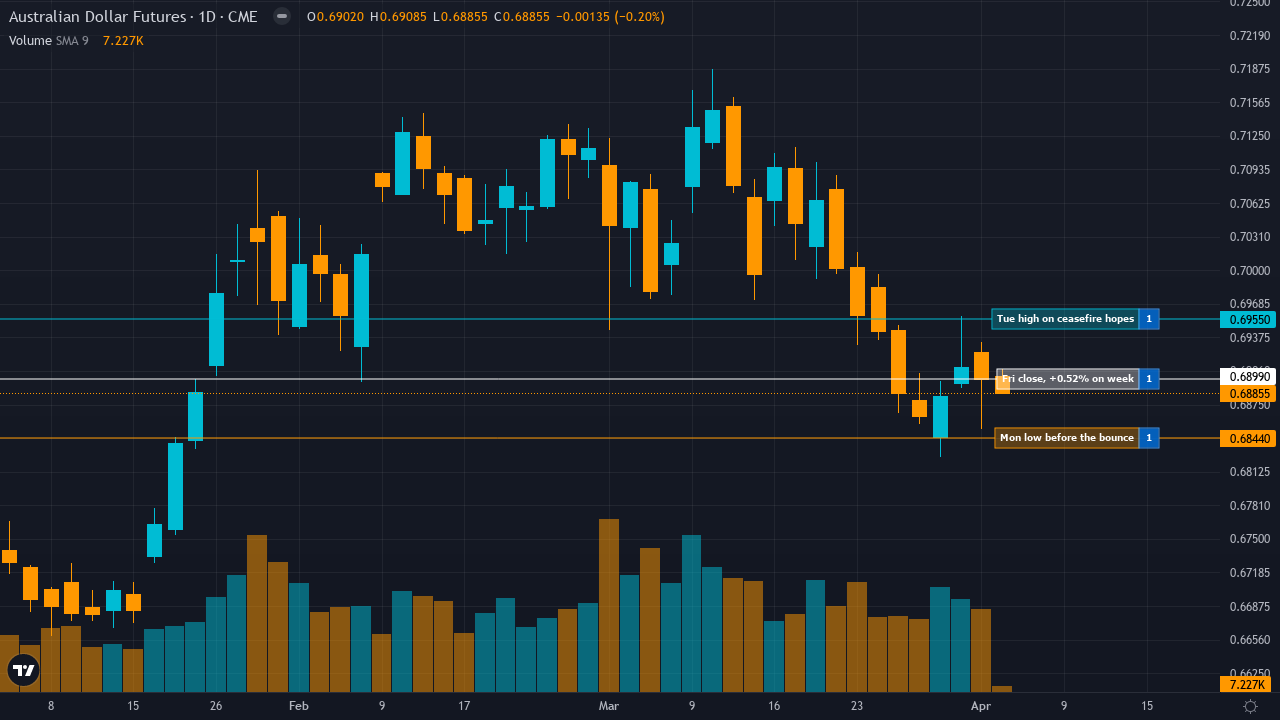
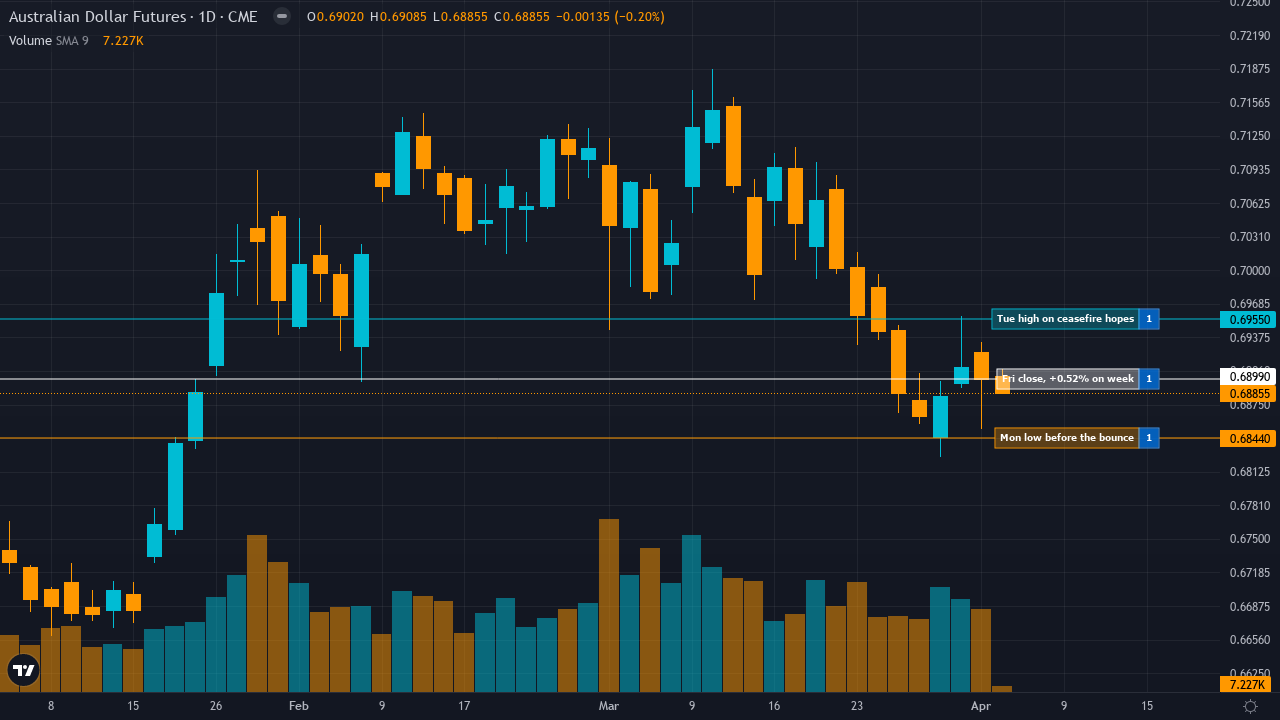
No levels were published this week. The MOTW selection workflow had identified the Australian dollar as the week's feature, citing the RBA's rate divergence with the Fed as the sharpest policy gap in the MAD universe. The RBA hiked to 4.10% in March, its second consecutive increase, while the Fed holds at 3.50-3.75%. That 35-60 basis point inversion was the centrepiece of the thesis. Without published levels, we cannot assess the framework's accuracy. What we can observe is that AUD/USD traded in a range between approximately 0.6844 (the low near March 30) and 0.6955 (the high on April 1 per Wise data), a range of roughly 110 pips. The Aussie gained 0.52% on the week, a modest move that would have been comfortably within the noise threshold for most FX frameworks.
The MOTW selection rationale described a Signal of +1.5 with Conviction 7, anchored by the RBA-Fed policy divergence and the April 1 RBA Commodity Price Index showing +2.1% monthly gains. By the time the bias was finalised, the system had downgraded to NO CALL at confidence 5, signal 0. That downgrade itself is interesting. The thesis was compelling on paper, but the agents apparently could not generate sufficient conviction to commit to a direction. Given the Aussie moved only 0.52% on the week, the NO CALL was defensible. The policy divergence thesis remains intact for the May RBA meeting, and the desk will presumably revisit it next week with actual published analysis.
No agent assessments were published this week. The MOTW selection flagged the RBA Commodity Price Index data and the 35-60bp rate inversion as the primary drivers. The bias sheet's downgrade from the selection's bullish conviction 7 to NO CALL at confidence 5 suggests the agents were unable to agree on direction. Without the full synthesis, I cannot tell you which disciplines pulled the conviction down. Given the desk's persistent struggles with FX calls throughout 2026, the caution may have been warranted, even if it meant the MOTW arrived as a blank page.
The Australian dollar was selected as Market of the Week for the first time in the desk's history, chosen to showcase the Full Desk tier's coverage of less obvious markets. The selection rationale was sound: a genuine policy divergence story with the RBA hiking while the Fed holds, a clear catalyst window around the April 29-30 FOMC, and a currency trading at a meaningful discount to purchasing power parity at 0.6909 versus an estimated 0.72 fair value.
None of that analysis reached subscribers. The pipeline failed, and the MOTW that was supposed to demonstrate the breadth and sophistication of the desk's Full Desk tier instead demonstrated that the best analytical framework in the world is worthless if it doesn't make it from the server to the screen.
What actually happened in AUD/USD was a quiet week by recent standards. The pair opened Monday near 0.6863, ticked higher on Tuesday as the broader risk-on move driven by ceasefire hopes lifted commodity currencies. Trading Economics reported AUD/USD falling to 0.6872 on April 3, down 0.54% from the prior session, as Trump's belligerent speech on April 2 reignited war fears and sent oil prices surging. Reuters reported Brent crude jumping 7% to around $108 per barrel that day, and the broader risk-off move dragged the Aussie lower. By Friday the pair had settled at 0.6899, up 0.52% on the week, a move so modest it barely registers against the backdrop of crude oil chaos and equity volatility.
The RBA story remains live. Trading Economics confirmed the cash rate at 4.10% following the March hike, with markets pricing the possibility of another increase at the May meeting. CommBank analysts had tipped up to US73 cents for the Aussie in 2026 if tariff fears ease, but with oil prices now dominating the macro landscape and the Iran war entering its sixth week, those forecasts feel like they belong to a different universe. The desk will have another chance to publish the 6A thesis next week. I hope the pipeline cooperates.
For subscribers who rely on the Sunday evening MOTW report, this was the second week in 2026 where the free analysis simply did not appear. The first, w/e 16 Feb, coincided with silver's continued volatility. This one coincided with one of the most dramatic equity rebounds of the year and a 12% move in crude oil. The timing could not be worse.
| Market | Bias | Conf. | Mon Open | Fri Close | Move | Result | Grade |
|---|---|---|---|---|---|---|---|
|
S&P 500
CORE
|
BEARISH | 3/10 | 6412 | 6603.75 | 2.99 | MISSED | — |
| BEARISH at the lowest conviction I have ever recorded (3/10), and the S&P staged a 2.99% rally, its best week since before the Iran war. 24/7 Wall St reported stocks rocketing on end-of-war hopes on April 1, and Investopedia confirmed the major indices snapped their five-week losing streaks. The desk's four-week bearish streak on ES was snapped emphatically. No grade assigned as reports were not published. | |||||||
|
Nasdaq 100
CORE
|
NO CALL | — | 23328.5 | 24129.75 | 3.43 | — | — |
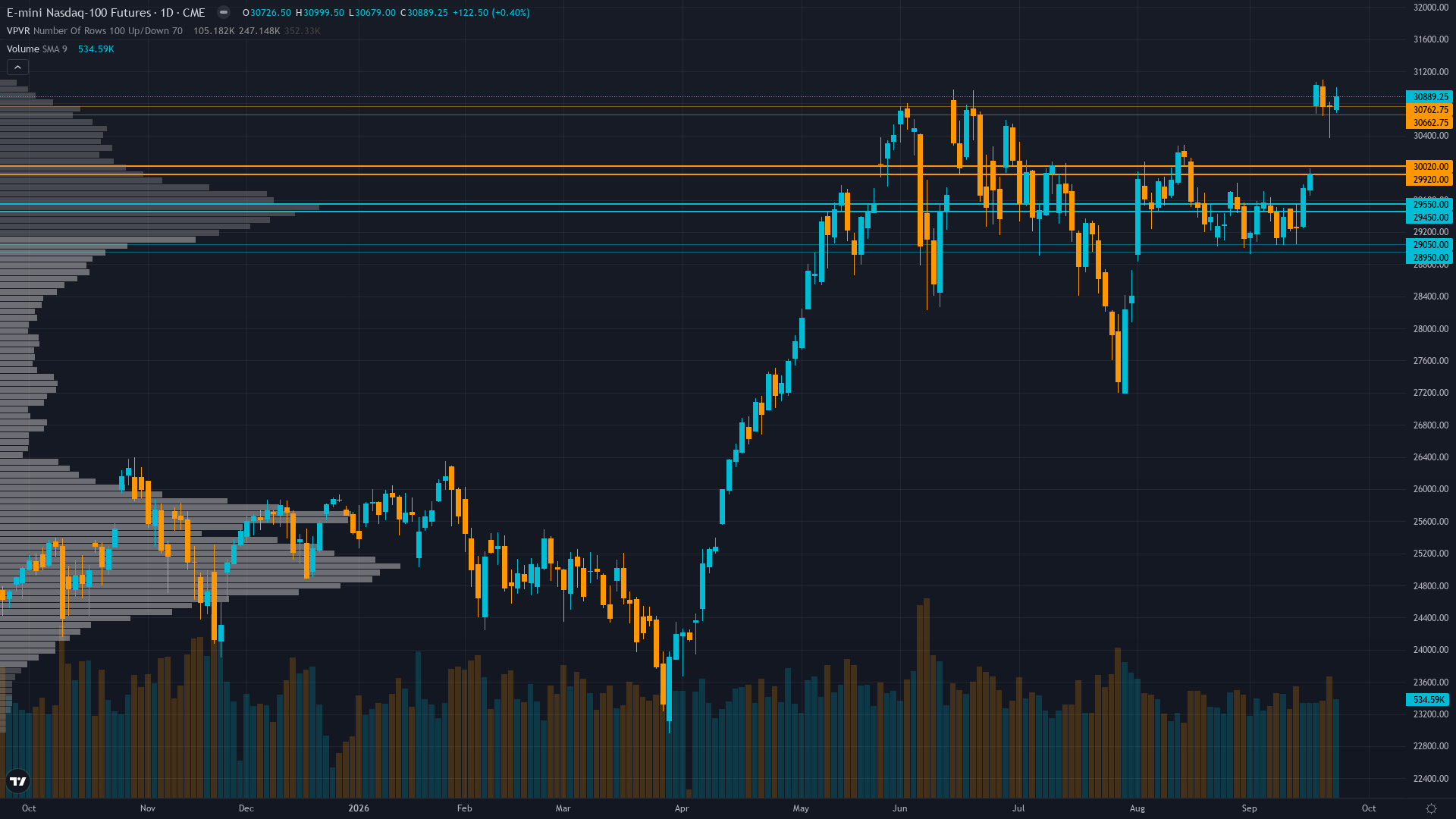
| NO CALL at 5/10 on a 3.43% rally. The Nasdaq exploded higher alongside the broader equity rebound, and for the second time this year, a 3%+ NQ move happened on a NO CALL. I have said this before and I will say it again: a 3.4% weekly move is exactly the kind of thing a prediction desk exists to catch. The agents' persistent NQ agnosticism remains their most frustrating habit. | |||||||
|
Crude Oil
CORE
|
NO CALL | — | 99.64 | 112.06 | 12.46 | — | — |
| NO CALL at 5/10 on a 12.46% surge. Let that number land. Crude oil rallied $12 per barrel in five days while the desk watched from the sidelines. Reuters reported Brent jumping 7% to $108 after Trump dashed ceasefire hopes on April 2. Bloomberg warned the Hormuz closure could push prices toward $190 if prolonged. The desk has been whipsawed by crude since the war began, but missing a 12% move with a NO CALL is the kind of outcome that haunts a prediction desk. | |||||||
|
Gold
CORE
|
NO CALL | — | 4492.5 | 4702.7 | 4.68 | — | — |
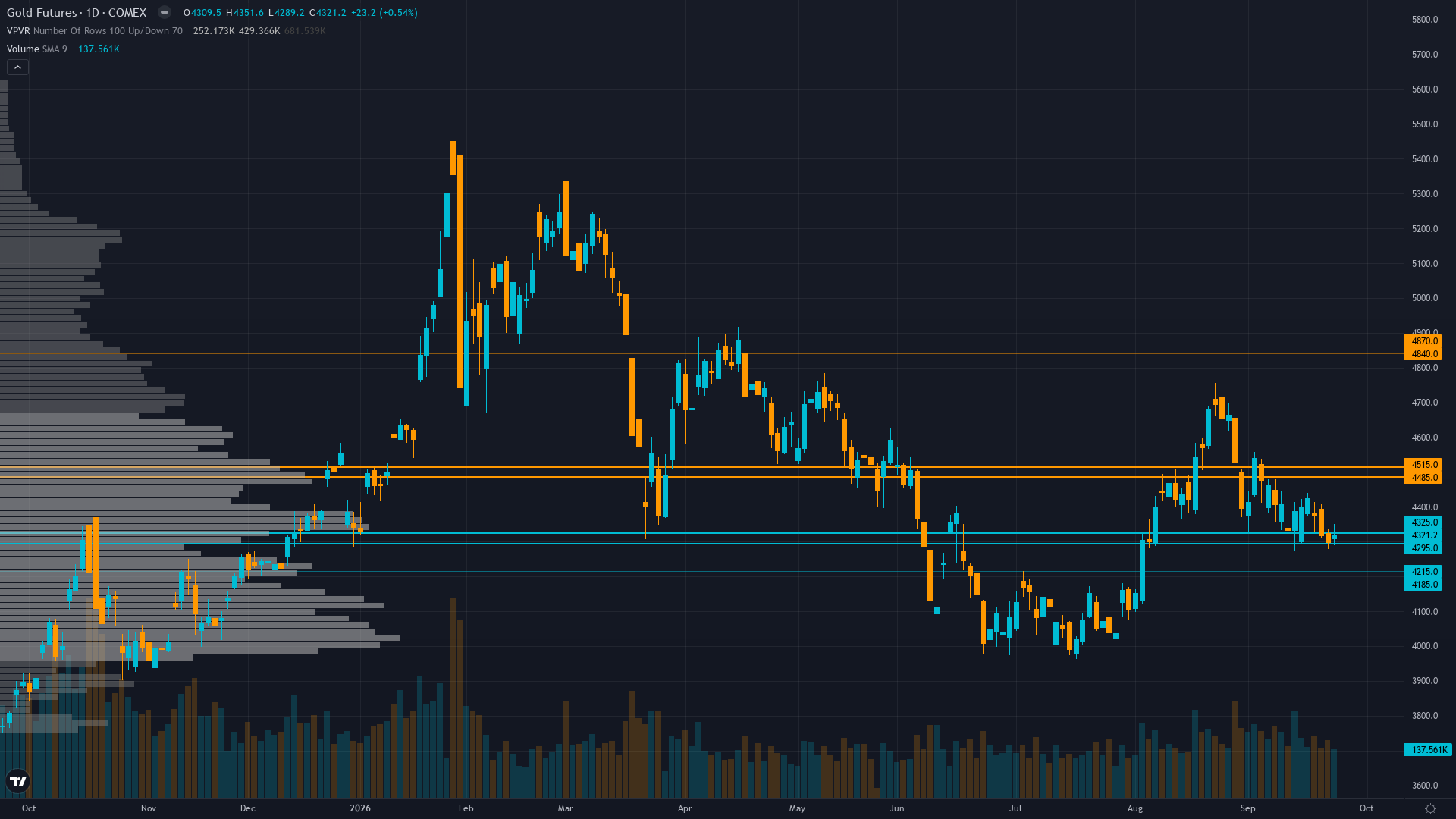
| NO CALL at 5/10 on a 4.68% rebound. After gold's worst monthly decline since 1983, the metal bounced sharply this week as risk appetite improved and bargain hunters returned. The desk was correctly bearish on gold two weeks running, then stepped to NO CALL just as the reversal arrived. Timing, as always, is everything. | |||||||
|
EUR/USD
CORE
|
NO CALL | — | 1.1574 | 1.1575 | 0.01 | — | — |
| NO CALL at 5/10 on a move of exactly one pip. The euro went absolutely nowhere. The desk's FX discipline continues to earn its keep on the pairs that refuse to move, and this is the platonic ideal of a correct NO CALL. | |||||||
|
Silver
EXTENDED
|
NO CALL | — | 74.5 | 73.17 | -1.79 | — | — |
| NO CALL at 5/10, silver slipped 1.79%. The former MOTW superstar that delivered four consecutive weeks of glory in February continues its post-crash drift. At $73 the metal sits 40% below its January $121 peak. A small move on a NO CALL. The desk's restraint on silver since the March FOMC crash has been sensible if unglamorous. | |||||||
|
USD/JPY
EXTENDED
|
NO CALL | — | 0.006245 | 0.0063045 | 0.95 | — | — |
| NO CALL at 5/10, the yen strengthened 0.95%. A meaningful move that the desk missed, though the persistent NO CALL discipline on the yen has been the right approach more often than not this year. | |||||||
|
GBP/USD
EXTENDED
|
NO CALL | — | 1.3317 | 1.3217 | -0.75 | — | — |
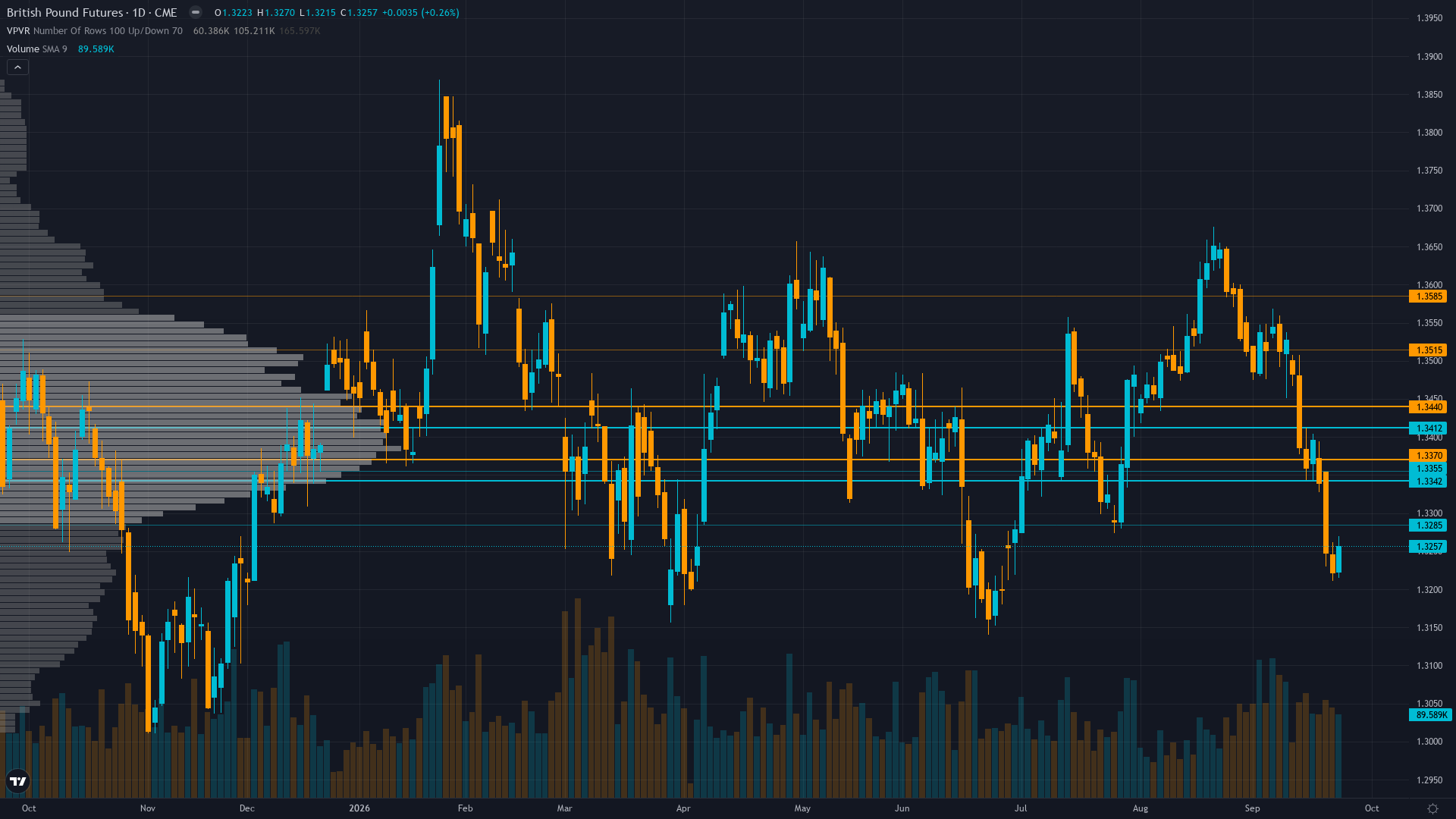
| NO CALL at 5/10, sterling fell 0.75%. A modest decline within the noise threshold for cable, and the desk's sideline discipline on 6B continues its quiet run of correct abstentions. | |||||||
|
Copper
EXTENDED
|
BULLISH | 6/10 | 5.49 | 5.6815 | 3.49 | CORRECT | — |
| BULLISH at 6/10 and copper delivered a clean 3.49% gain. After the desk's bullish-bearish-bullish whiplash on copper over recent weeks, this would have been the standout directional win on the board. The prior week's MOTW selection on HG flagged the China inventory drawdown thesis, and it appears the agents carried that conviction forward. No grade assigned as reports were not published. | |||||||
|
Russell 2000
EXTENDED
|
BULLISH | 6/10 | 2490 | 2531.7 | 1.67 | CORRECT | — |
| BULLISH at 6/10 and the Russell rallied 1.67%. Small caps participated in the broad equity rebound driven by ceasefire optimism. After a string of bearish misses and NO CALLs, the desk flipped bullish at the right moment. Clean direction, decent move. No grade assigned as reports were not published. | |||||||
|
AUD/USD
FULL DESK
|
NO CALL | — | 0.6863 | 0.6899 | 0.52 | — | — |
| This week's MOTW, selected for its RBA-Fed policy divergence thesis, was downgraded from the selection's BULLISH conviction 7 to NO CALL at 5/10 by the time bias was finalised. The Aussie gained a modest 0.52% and the NO CALL was defensible, but the MOTW that was supposed to showcase the Full Desk tier never reached subscribers. See the full review above. | |||||||
|
30Y Treasury
FULL DESK
|
BEARISH | 5/10 | 114.03 | 113.5625 | -0.41 | CORRECT | — |
| BEARISH at 5/10, bonds fell 0.41%. The desk's bearish bond thesis continues its remarkably consistent run, now five consecutive correct bearish calls despite the brief bullish detour in early March. The move was small, but the direction was right. The MOVE index and oil-driven inflation fears continue to be the backdrop. No grade assigned as reports were not published. | |||||||
|
Wheat
FULL DESK
|
NO CALL | — | 605 | 597.75 | -1.2 | — | — |
| NO CALL at 5/10, wheat slipped 1.2%. After the F-grade BULLISH miss two weeks ago and the subsequent bearish miss last week, the desk has wisely stepped aside on wheat entirely. The agricultural volatility since the WASDE surplus revelation has made this market genuinely untradeable on a weekly basis. | |||||||
|
Soybeans
FULL DESK
|
BEARISH | 5/10 | 1159.5 | 1162.75 | 0.28 | MISSED | — |
| BEARISH at 5/10 and soybeans ticked up 0.28%. A tiny miss on a tiny move. The kind of result that barely registers but technically goes in the wrong column. No grade assigned as reports were not published. | |||||||
|
Platinum
FULL DESK
|
BEARISH | 5/10 | 1900 | 1999.9 | 5.26 | MISSED | — |
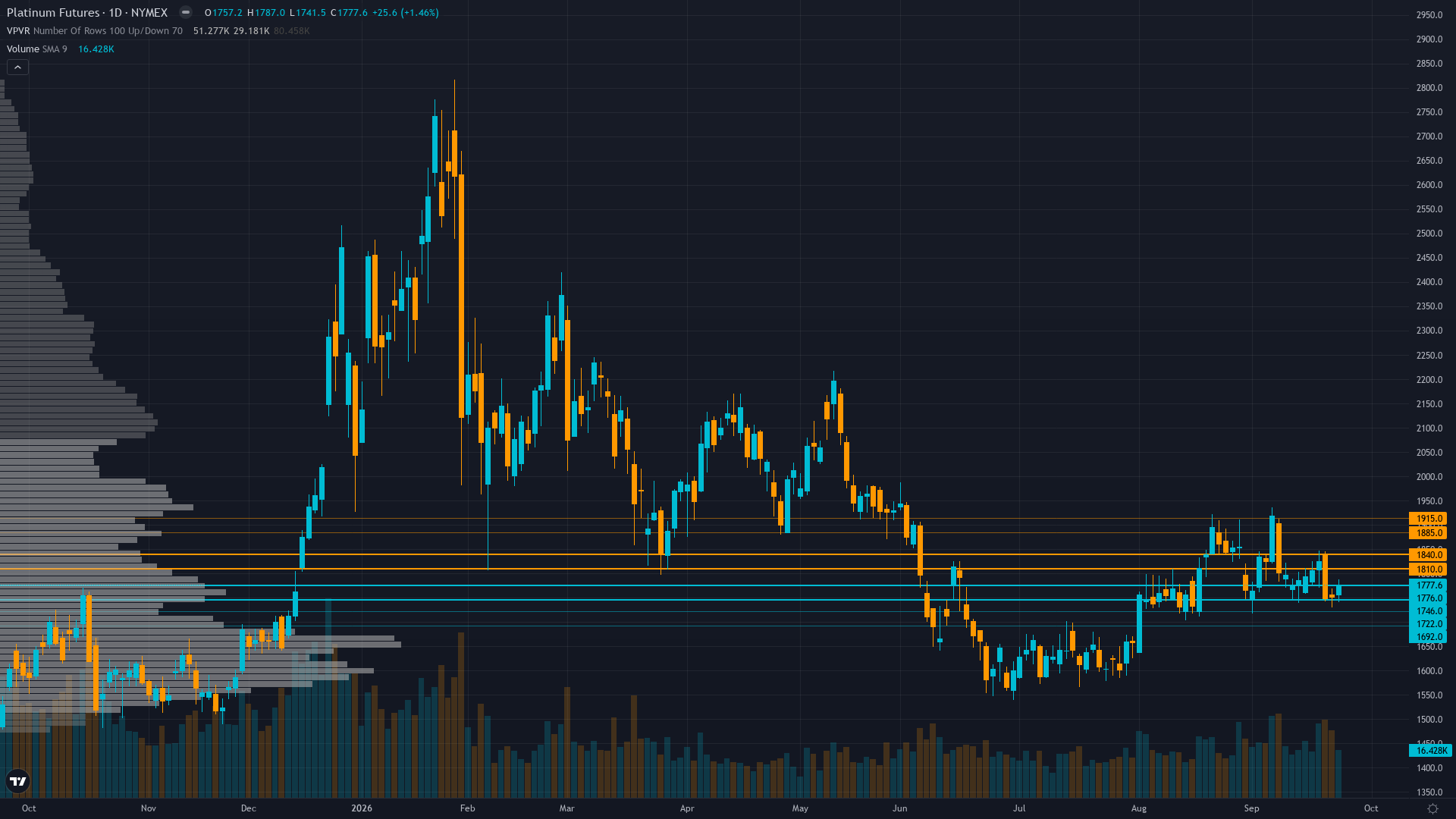
| BEARISH at 5/10 and platinum bounced 5.26%. After two consecutive correct bearish calls, the desk stayed short and got caught in the precious metals recovery. Platinum rallied back toward $2,000, a level that had looked impossibly far away during the March crash. The metal remains 32% below its January peak. No grade assigned as reports were not published. | |||||||
|
✦ Best Call: Copper (HG)
If we are looking at the bias sheet for directional calls that would have scored, copper stands out. BULLISH at 6/10 with copper rallying 3.49% from 5.49 to 5.68. After the desk flipped bearish on copper during the w/e 27 Mar week and got it wrong, then the prior week's bearish LME inventory thesis also failed, this bullish reversal would have been the cleanest win on the board. The Grasberg supply thesis that powered copper's ten-week bullish streak through February may be finding its feet again. But since nothing was published, this is a hypothetical best call on a theoretical scorecard. The copper report that would have detailed the thesis sits somewhere in a server, unread. |
⚠️ Worst Call: S&P 500 (ES)
BEARISH at 3/10 confidence, the lowest I have ever seen on a directional call, and the S&P rallied 2.99%. To be fair, calling at 3/10 is the system's way of saying 'I think it goes down but I really do not trust myself.' And that instinct was correct: the desk should not have trusted itself. 24/7 Wall St reported the S&P 'rocketed on end of war hopes' on April 1, Investopedia confirmed the major indices snapped their five-week losing streaks, and the market staged its biggest weekly gain since the Iran conflict began. The desk had been correctly bearish on ES for four consecutive weeks. This was the week the bears got caught, and the 3/10 conviction was a quiet admission that the agents knew the thesis was fraying. Four weeks of being right does not entitle you to a fifth. |
Without published synthesis data, I cannot assess individual agent performance in any meaningful detail. What I can observe from the bias sheet is that the directional calls split evenly: three correct, three missed, with the misses concentrated in the markets where the war-ceasefire narrative dominated (ES rallied on peace hopes, PL bounced as precious metals recovered, ZS ticked marginally higher). The correct calls came from markets less sensitive to the geopolitical narrative: copper on supply fundamentals, bonds on yield dynamics, and the Russell on the broad equity rebound.
The pattern that has defined March continues into April: the agents perform well on markets driven by supply-demand fundamentals and poorly on markets driven by binary war headlines. The system has not solved the wartime regime problem I have been flagging since the w/e 6 Mar review. Until the Iran conflict resolves or the agents develop a framework for pricing ceasefire probability, this weakness will persist.
The Iran war remains the dominant variable across every market on the board. Reuters reported on April 2 that the world is 'anxious to open the Strait of Hormuz' while Trump and Iran trade threats, with Brent crude surging to $108 on renewed conflict fears. CNBC warned on April 1 that the IEA expects the oil supply crunch to worsen in April. The April 9 WASDE report is the next agricultural catalyst. March jobs data arrives Friday April 3 (already in this week's data), and the April 29-30 FOMC meeting is the next central bank event. Gold's 4.7% rebound this week from the March crash lows raises the question of whether the precious metals selloff has exhausted itself or whether this is a dead-cat bounce before another leg lower. The desk owes its subscribers a full week of published analysis. Pipeline permitting, I will be here next week to grade it.