Wheat Forecast This Week — Outlook, Drivers & Key Levels
This week's Wheat outlook: key drivers, volatility context, risk-opportunity assessment and the week ahead.

Current Market Picture
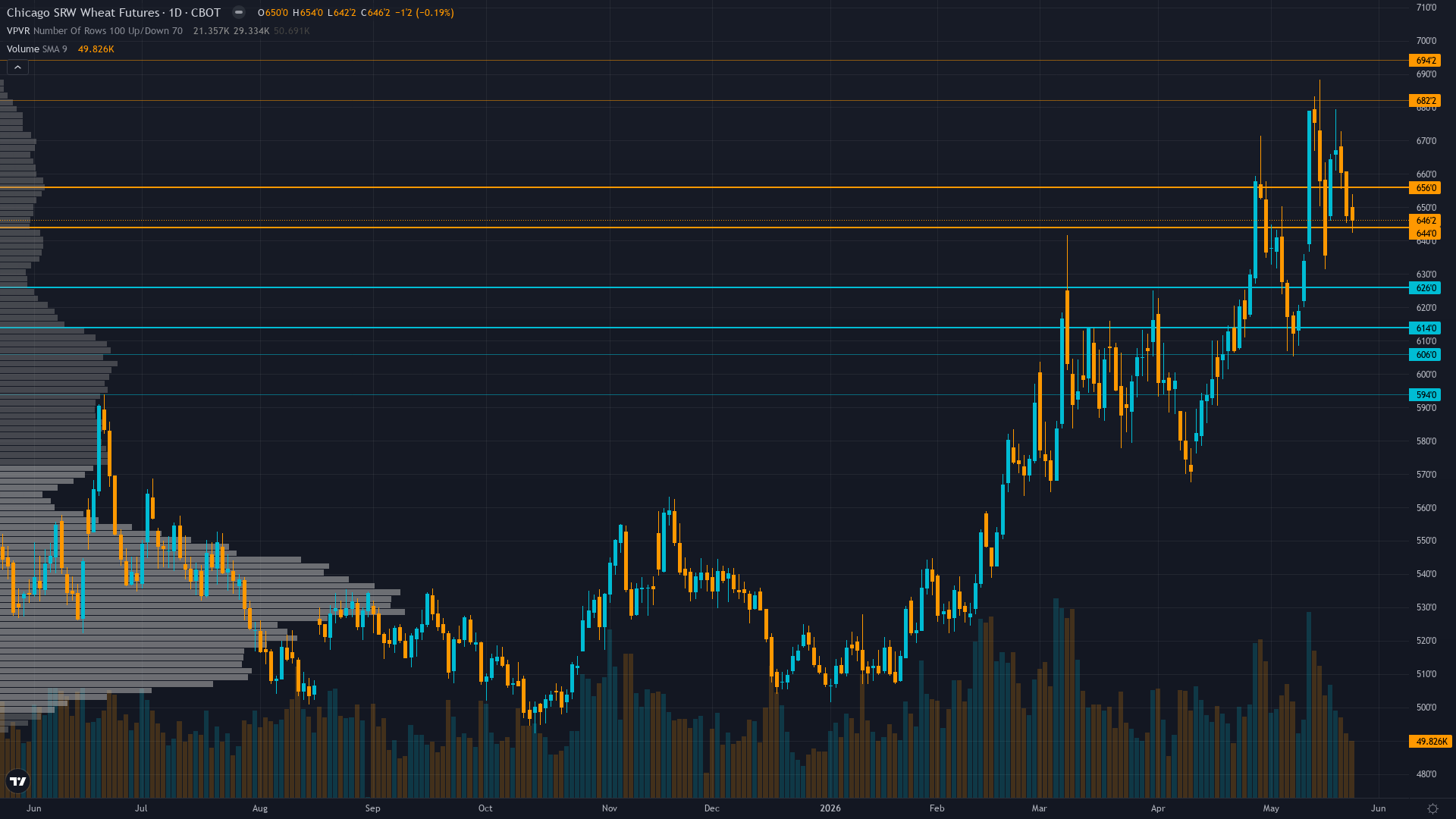
wheat holds at 647, up a marginal 0.14% as the market grinds forward. wheat futures is in a consolidating after rally market state, requiring careful assessment of current conditions.
Cautiously bullish on May 12 WASDE production downgrades confirming most severe U.S. wheat shortfall since 1972 with crop conditions at 28% good-to-excellent versus 46% last year, yet increasingly concerned about sustainability above 650 given 6% pullback from May 12 highs, global stocks at 951.5 million tonnes (34.52% stocks-to-use ratio), and approaching seasonal June-August harvest pressure period
Key Drivers This Week
Primary driver: May 12 WASDE bullish production shock showing U.S. wheat output at 1,561 million bushels (lowest since 1972, down 21.3% YoY) with crop conditions at 28% good-to-excellent versus 46% last year and 69% of winter wheat areas in drought, yet current price at 647 already reflects substantial weather premium 32% above October lows suggesting much of the supply tightening is priced while global stocks remain at record 951.5 million tonnes
Secondary factor: Institutional positioning shows net short -53,852 contracts as of May 5 representing continued bearish stance despite rally, with 84% of extreme shorts from prior months already covered removing asymmetric squeeze fuel yet still creating modest short-covering potential if June 10 WASDE confirms additional production downgrades from ongoing drought stress
Additional influence: Entering seasonally weak June-August period for Northern Hemisphere wheat as harvest pressure typically weighs on prices, yet 2026 unique drought conditions with 70% of winter wheat areas affected and USDA projecting season-average price at $6.50/bushel (up $1.50 YoY) creates tension where seasonal bearish patterns clash with severe supply-side fundamentals
Economic backdrop: TRANSITIONAL macro regime with VIX 17.26 neutral, USD weakness to 97.7 DXY (lowest since February 2026, down 2.42% YoY) following Powell-to-Warsh Fed Chair transition with dovish tilt supporting U.S. agricultural export competitiveness, crude oil retreating from geopolitical spike highs to sub-$95/bbl reducing input costs (diesel, fertilizer) creating supportive margin backdrop for wheat production economics
Fundamental assessment: Profoundly bullish U.S. supply-side dynamics with May 12 WASDE confirming production at 1,561 million bushels (lowest since 1972, down 21.3% YoY) and crop conditions at 28% good-to-excellent versus 46% last year with 69% of winter wheat areas in drought per Agriculture in Drought report, yet global stocks remain structurally ample at 951.5 million tonnes creating fundamental tension where U.S. regional supply destruction meets global oversupply baseline requiring export flow monitoring to determine whether domestic tightness translates to sustained price premium
Price Structure
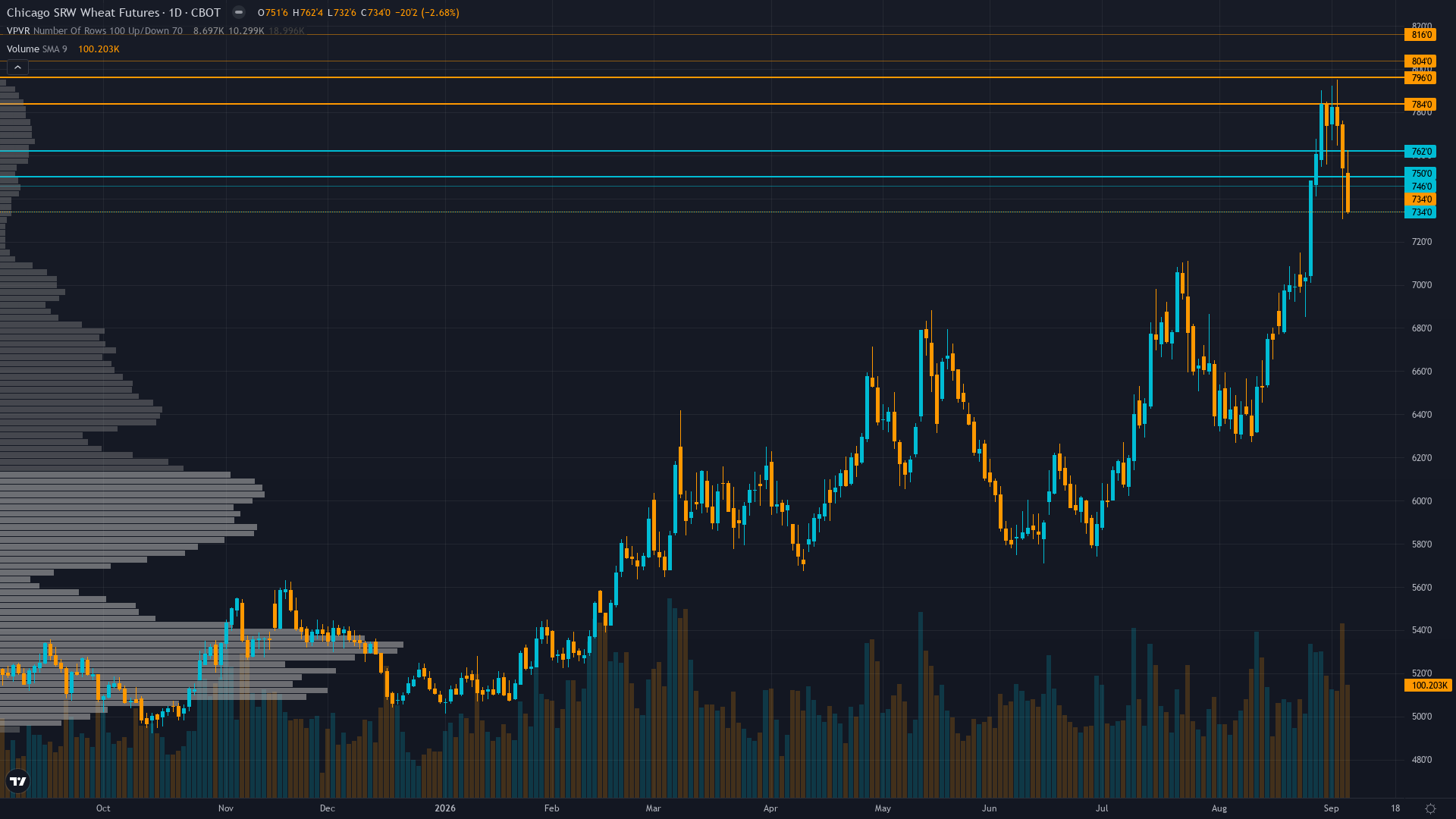
Price at 647 consolidating in 635-660 range after 1.77% weekly gain, trading 32% above October 492 capitulation lows yet 6% below May 12 intraday peak at 688.25 (52-week high), establishing position above key moving averages in emerging uptrend structure with RSI estimated 55-60 indicating bullish momentum without overbought extremes
Trend strength sits at 6/10, reflecting a market that has directional bias but hasn't reached extreme conviction.
Upside & Downside
Primary risk: June 10 WASDE confirms May 12 production forecasts as floor with no further deterioration from drought conditions or reveals timely late-May rainfall salvaged some yield potential sending market back toward 610-620 support as global stocks at 951.5 million tonnes (34.52% stocks-to-use ratio) reassert structural oversupply narrative dominance over U.S. regional supply tightening, combined with entering seasonally weak June-August harvest pressure period for Northern Hemisphere wheat typically producing 5-10% price declines absent severe weather disruptions (Probability: medium)
Primary opportunity: Continued Plains drought intensification through late May-June combined with June 10 WASDE confirming additional production downgrades beyond May 12 estimates triggers rally toward 670-688 range retest as 69% drought coverage with only 28% good-to-excellent ratings materializes sustained yield losses exceeding current market pricing, while net short positioning at -53,852 contracts provides modest fuel for short-covering acceleration if supply concerns deepen (Timeframe: Next 2-3 weeks through June 10 WASDE and critical late-May/early-June weather window for final 2026 winter wheat crop development before harvest begins in Southern Plains)
This week's edge: Market may be underestimating duration and severity of production losses from 69% drought coverage affecting winter wheat areas with only 28% good-to-excellent crop ratings creating scenario where June 10 WASDE confirms sustained yield degradation beyond May 12 estimates as months-long drought stress compounds through final development stages despite improved late-May moisture forecasts, yet desk acknowledges global 34.52% stocks-to-use ratio and seasonal harvest pressure approaching create genuine two-way uncertainty requiring balanced conviction versus entrenched bullish stance—last week's CORRECT call validates production-driven thesis yet 32% rally from October lows reflects substantial premium already priced
Volatility Context
At the 70th percentile of its 90-day range, wheat price volatility is running hot, creating both opportunity and risk for directional traders. Realised vol is holding its current level, suggesting the market has found a temporary equilibrium in its risk pricing.
Seasonal Patterns
The seasonal tailwind for CBOT wheat in May 2026 is well-documented at 62%. Crop condition reports and weather risk peak.
Looking Forward
All eyes turn to USDA June 2026 WASDE Report with updated winter wheat production estimates incorporating final spring weather conditions, harvest progress data from Southern Plains drought-affected areas, and initial 2026/27 crop year demand projections determining whether May 12 production downgrades represent floor or further deterioration warranted on Wednesday 10 June, which carries enough weight to force a decisive directional move.
The week ahead for wheat price hinges on whether the prevailing consolidating after rally regime can absorb the scheduled catalysts without a regime shift.
This analysis covers one dimension. Our full weekly report combines six specialist agents into a single actionable briefing with directional bias, key levels, and risk-opportunity matrix.
Start Free — Get the Market of the WeekFree weekly report · No credit card · Upgrade anytime