30-Year Treasury Forecast This Week — Outlook, Drivers & Key Levels
This week's 30-Year Treasury outlook: key drivers, volatility context, risk-opportunity assessment and the week ahead.

This Week's Starting Point
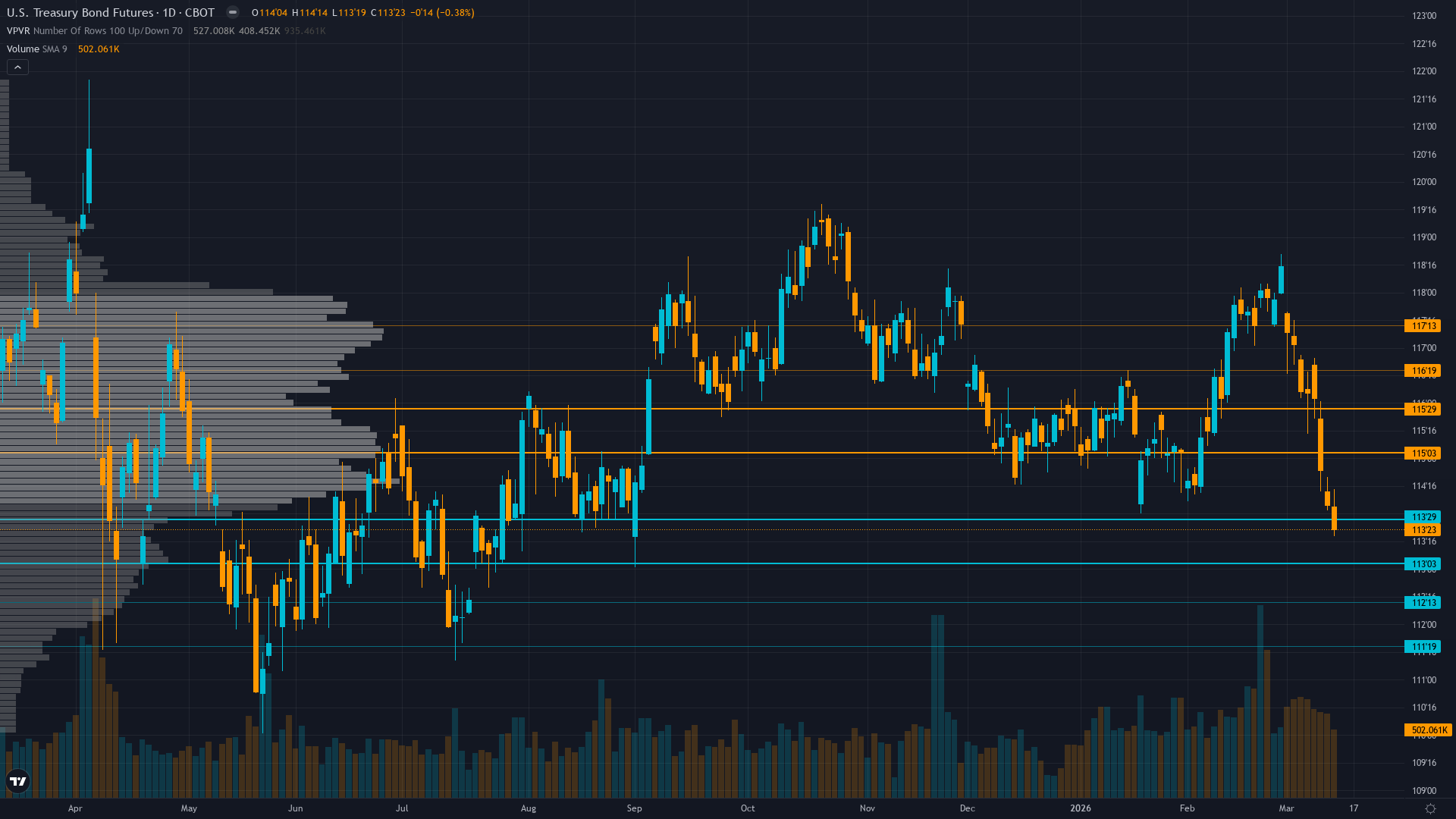
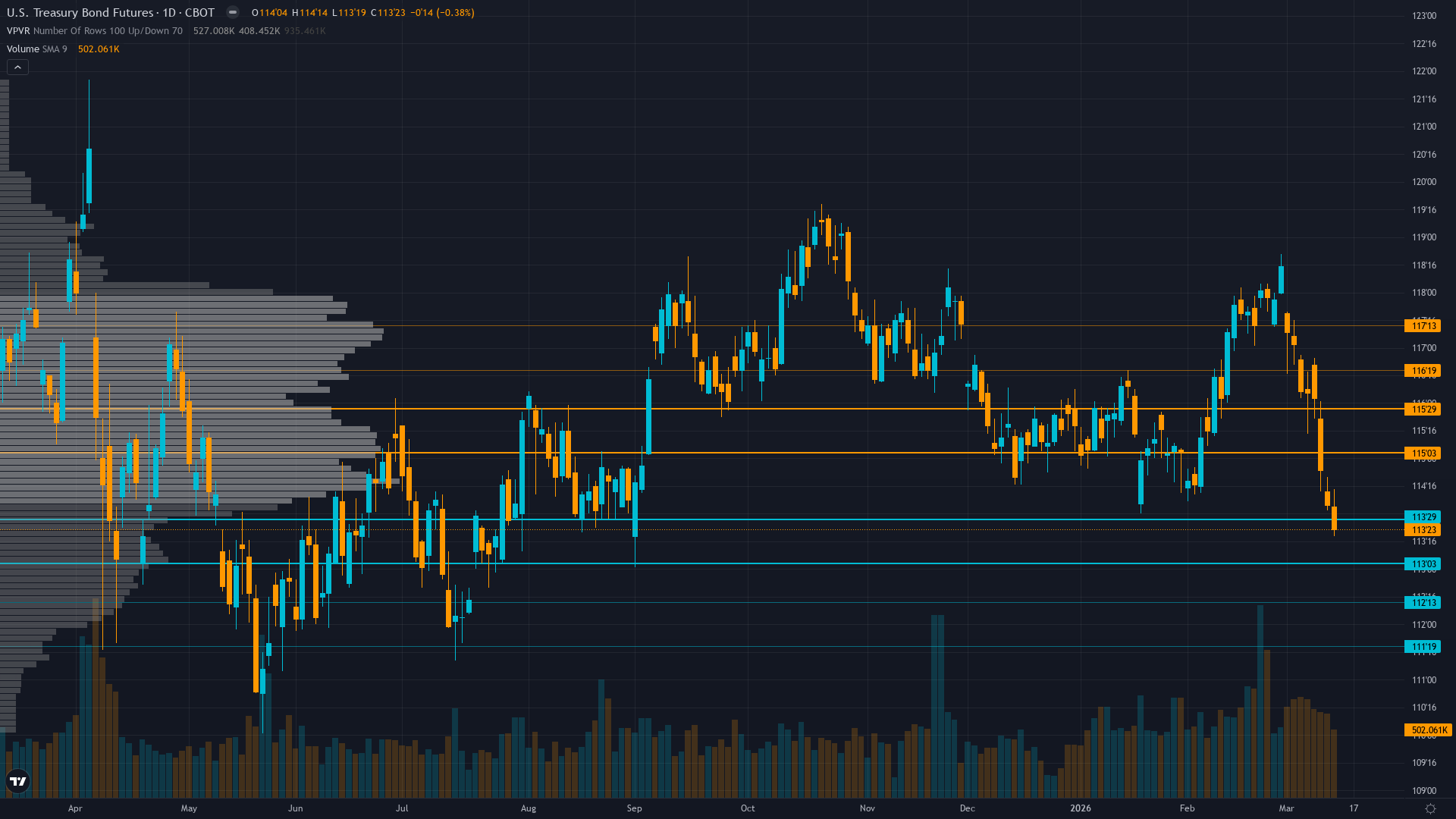
Trading at 114.34 with a 0.35% dip, 30-year Treasury is giving back ground gradually. Treasury bond futures is in a breaking down after last week's selloff market state, requiring careful assessment of current conditions.
Market pricing 92% hold at March 18-19 FOMC with only one cut expected for all of 2026; bonds consolidating 112-118 range awaiting FOMC clarity on terminal rate trajectory
Forces in Play
Primary driver: Violent breakdown from 116 to 113.72 last week confirms post-February rally exhaustion with FOMC blackout period creating informational void ahead of March 18-19 decision
Secondary factor: MOVE volatility index at 91.17 up 22% weekly and 41% monthly from compressed levels signaling expanding uncertainty despite VIX elevated at 27.85 creating mixed risk signals
Additional influence: Fresh fundamental catalyst from CBO March 9 report showing FY2026 deficit at $1.9 trillion with $308B February issuance maintaining structural supply pressure on long duration
Economic backdrop: February CPI at 2.5% YoY sticky above 2% target with weak payrolls -92k creating conflicting signals; Fed Chair Powell term ends May 2026 adding leadership uncertainty; PPI due March 18 same day as FOMC
Fundamental assessment: Fed at 3.50-3.75% with 92% probability of hold at March 18-19 FOMC; FY2026 deficit $1.9T with $308B February issuance creating structural bearish repricing environment for long duration
Technical Landscape
Breakdown structure complete with former 116.5 support now resistance; current price at 114.34 testing mid-range between 113.5 support and 115.5 resistance with Strong Sell technical rating
Trend strength is low at 2/10, indicating weak directional conviction and potential for range-bound behaviour.
Risk-Reward Assessment
Primary risk: FOMC on March 18-19 surprises dovish with dot plot showing more cuts than market expects (currently only one in 2026) triggering violent short covering rally above 116.5 resistance toward 118-120 zone invalidating bearish signal (Probability: medium)
Primary opportunity: Continued breakdown below 113.5 support on hawkish FOMC rhetoric or strong economic data forcing terminal rate repricing higher with cascade potential to 112 major support representing additional 1.5-2.0% decline opportunity (Timeframe: Next 1-2 weeks through March 18-19 FOMC and immediate post-decision repricing)
This week's edge: Desk identifies structural supply pressure from $1.9T FY2026 deficit with $308B February issuance as underweighted fundamental driver creating persistent bearish undertone independent of Fed path; however FOMC binary risk 3-4 days away creates two-way uncertainty limiting conviction to noise-threshold minimum
Risk Environment
With vol at the 42th percentile over 90 days, T-bond futures is in a measured regime that doesn't require unusual adjustments. Volatility is expanding, with realised vol rising across timeframes. This typically signals increasing uncertainty and wider daily ranges ahead.
Volatility expansion creating elevated environment; daily ranges expanding from 0.5 handles to 1.0-1.5 handles with maximum binary risk into March 18-19 FOMC; current 114.34 price in consolidation zone between 113.5-115.5 awaiting catalyst
Looking Forward
All eyes turn to FOMC policy decision March 18-19 at 2:00 PM with Powell press conference at 2:30 PM plus updated dot plot - THE dominant catalyst with 92%+ hold probability but forward guidance critical on Thursday 19 March, which carries enough weight to force a decisive directional move.
The week ahead for Treasury bond futures hinges on whether the prevailing breaking down after last week's selloff regime can absorb the scheduled catalysts without a regime shift.
This analysis covers one dimension. Our full weekly report combines six specialist agents into a single actionable briefing with directional bias, key levels, and risk-opportunity matrix.
Start Free — Get the Market of the WeekFree weekly report · No credit card · Upgrade anytime