USD/JPY (6J) — 0.8 between 152.2 support and 156 resistance with 5/10 confidence
Mild USD/JPY bullish bias on rate differential; intervention risk acknowledged but not priced as imminent

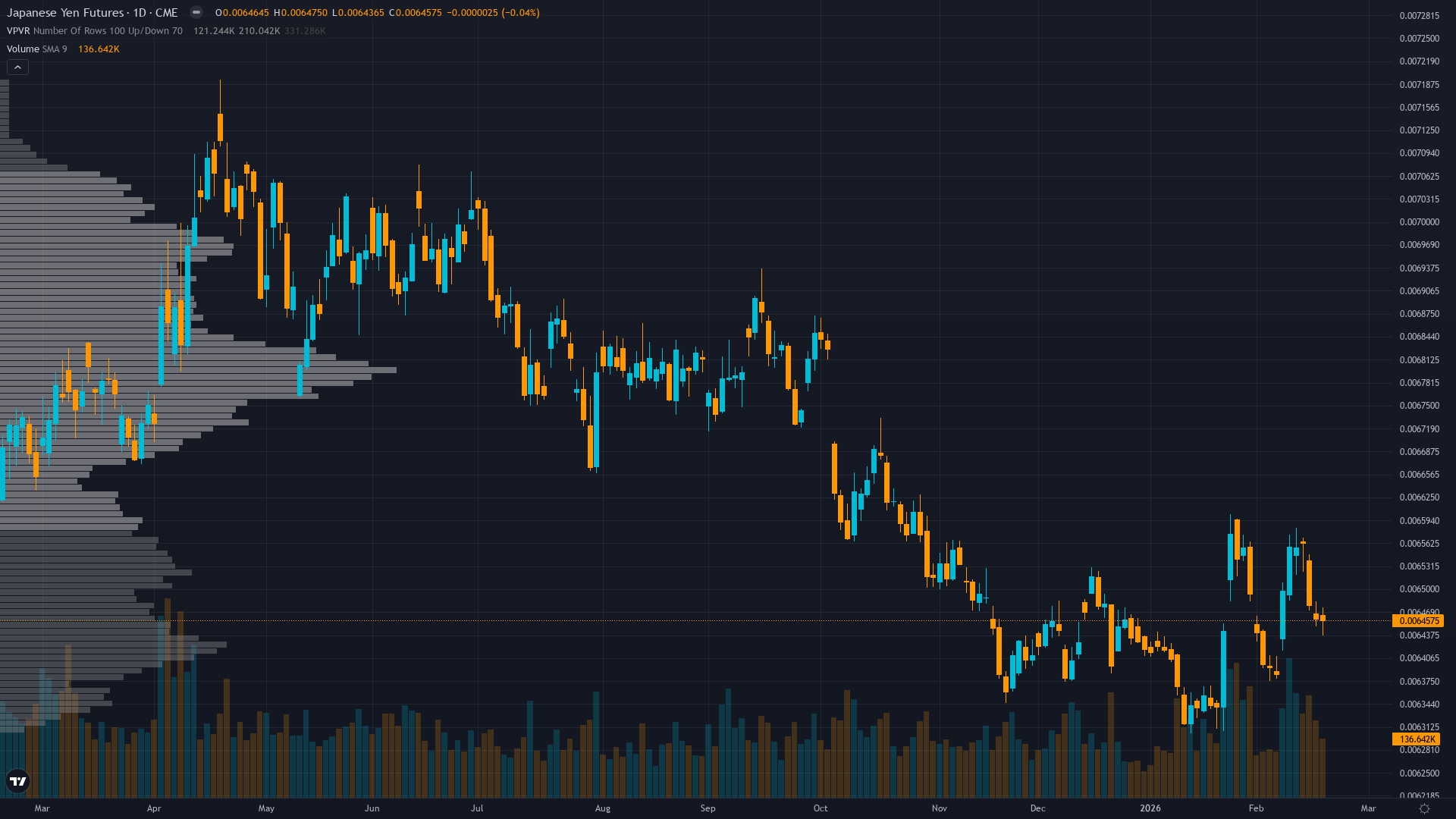
Mild USD/JPY bullish bias on rate differential; intervention risk acknowledged but not priced as imminent
BoJ policy hold at 0.75% vs Fed pause at 3.5-3.75% maintains wide rate differential
Intervention risk elevated as USD/JPY approaches 155-160 zone flagged by MoF
Speculative positioning near neutral at -19.1K contracts per latest COT (Feb 13)
| ▲ Resistance Zone 2 | 159.9980 – 160.0020 |
| ▲ Resistance Zone 1 | 155.9980 – 156.0020 |
| ─ Pivot Area | ~154.8000 |
| ▼ Support Zone 1 | 152.1980 – 152.2020 |
| ▼ Support Zone 2 | 149.9980 – 150.0020 |
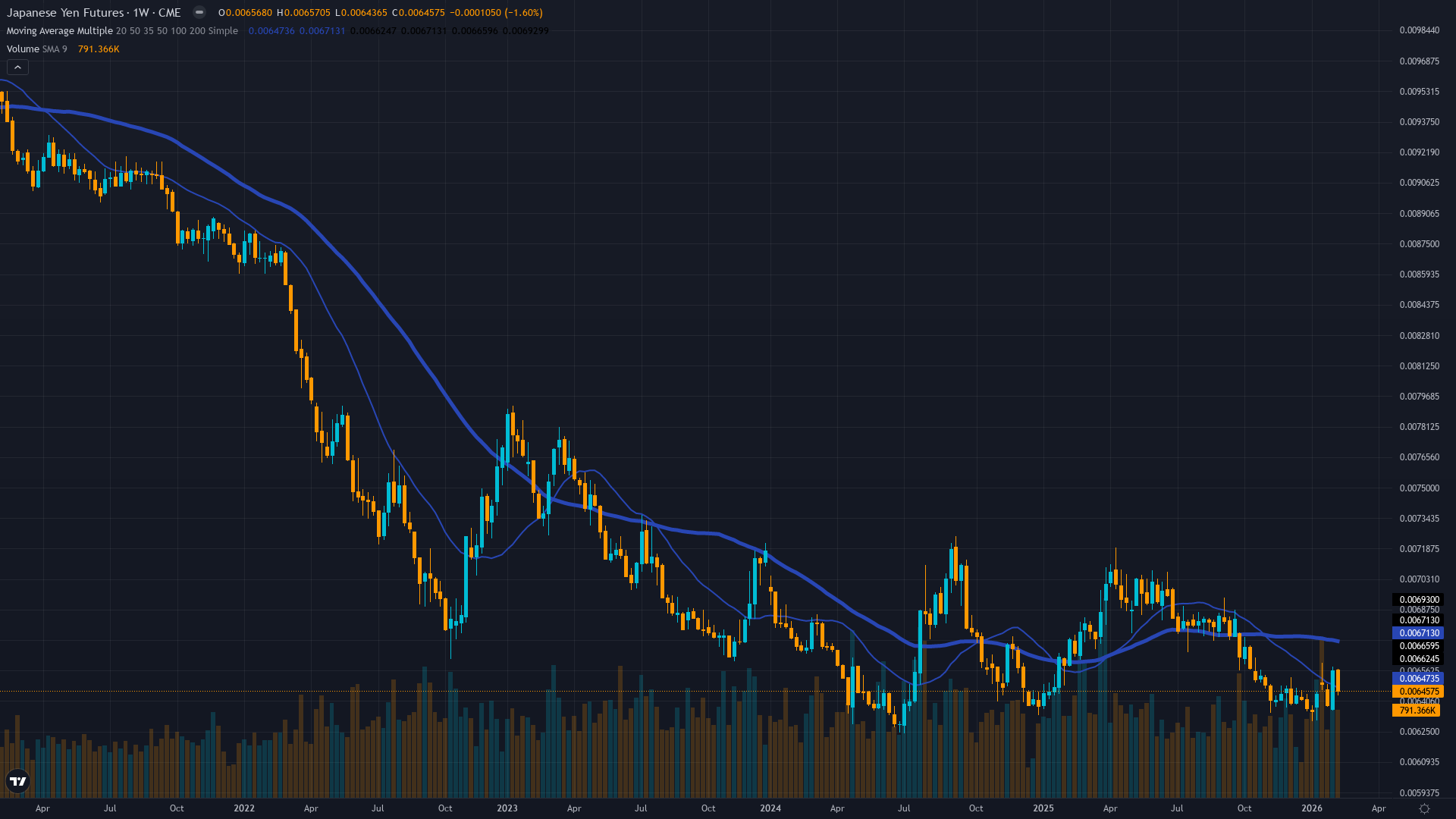
RSI 74.9 overbought, trading above 50-day MA 153.59, near resistance cluster 155-157
Rate differential of ~275bp favors USD but BoJ normalization path limits upside; carry trade dynamics stable
COT speculators near neutral at -19.1K, not at extreme; commercial hedgers balanced
USD/JPY implied volatility at 9.41 (low regime), ATR 0.195 suggests range-bound conditions
Fed on hold at 3.5-3.75%, BoJ held 0.75% at Jan 23 meeting with one dissent for 1.00%; inflation sticky at 3% in US
Normal - short-term vol 6.8% below medium-term 7.2%, indicating stable expectations
USD/JPY vol typically compresses during BoJ policy pause periods; similar 7-8% levels in H2 2025 preceded range-bound trading for 6-8 weeks before event-driven spikes
Vol likely to remain compressed near 7-8% range unless intervention event or BoJ policy surprise; mean reversion to 9-10% would require catalyst within 4-6 weeks
Low vol regime supports tight stops (80-100 pips) and range strategies; breakout reliability reduced—require 1.5x ATR moves for confirmation; daily range expectations 60-90 pips
Risk/reward asymmetric: intervention risk caps upside to 160 (3% gain) but downside to 150 support is 3.4%; low vol creates attractive premium selling opportunities in 152-157 range
|
⚠️ Primary Risk
Japanese MoF/BoJ coordinated intervention if USD/JPY pushes toward 160 Probability: MEDIUM
|
✦ Primary Opportunity
Range-bound trading 152-157 with intervention risk capping upside Timeframe: Next 2-3 weeks until FOMC
|
USD/JPY is consolidating in the 152-157 range on February 22, 2026, trading at 155.20, caught between opposing forces: the wide US-Japan rate differential (~275bp) provides structural USD support, but intervention risk is rising as price approaches the 155-160 zone where Japanese authorities have historically defended the yen. The BoJ held rates at 0.75% on January 23 despite one board member dissenting for 1.00%, signaling caution on further tightening amid snap election uncertainty. Meanwhile, the Fed remains paused at 3.5-3.75% with Chicago Fed's Goolsbee suggesting 'several' cuts possible this year if inflation reaches 2%, but current CPI stuck at 3% keeps near-term cuts off the table.
Technical indicators show overbought conditions (RSI 74.9) and the pair is trading above its 50-day MA (153.59), but momentum is stalling at resistance near 156.00. Volatility is low: implied vol at 9.41 and ATR at 0.195 suggest range-bound behavior. COT data shows speculative net positioning at -19.1K contracts (Feb 13), essentially neutral—not at extremes that would signal impending reversals. The VIX at 19.6-20.8 indicates low-to-normal equity market stress, reducing carry unwind risk for now. Given the pair's 0.66% average weekly move and a 0.50% noise floor, this week's 0.13% move is below the threshold for high-conviction directional calls.
The setup is classic FX mean-reversion: fundamentals lean mildly bullish (rate differential), but tactical factors (intervention risk, overbought technicals, low volatility) argue for range-trading rather than trend-following. My signal of +0.8 reflects a slight bullish lean on rate differentials, but conviction of 5 reflects the lack of a clear catalyst and elevated political/intervention uncertainty. Devil's advocate: If BoJ accelerates normalization or if the Fed signals June cuts, the rate differential could compress sharply, triggering a 5-7 yen JPY rally (USD/JPY drop to 148-150 zone). Discipline weights remain close to FX_MAJOR category defaults given balanced fundamental, institutional, and technical inputs.
| Week | Bias | Confidence | Result |
|---|---|---|---|
| February 21, 2026 | BULLISH | 6/10 | ❌ |
| February 13, 2026 | BULLISH | 6/10 | ❌ |
| February 8, 2026 | BULLISH | 7/10 | ❌ |
| February 1, 2026 | NEUTRAL | 7/10 | ❌ |
| January 25, 2026 | BULLISH | 7/10 | ❌ |
| January 11, 2026 | BULLISH | 7/10 | ❌ |
| January 4, 2026 | BEARISH | 6/10 | ✅ |
| December 28, 2025 | BEARISH | 6/10 | ✅ |
| December 21, 2025 | BULLISH | 7/10 | ✅ |
| December 14, 2025 | BULLISH | 7/10 | ❌ |
| December 7, 2025 | BEARISH | 6/10 | ✅ |
| November 30, 2025 | BEARISH | 6/10 | ❌ |