GBP/USD (6B) — Bank of England February 5 rate decision holding rates at 3.75% via narrow 5-4…
Neutral to mildly bullish consolidation expected as February 5 BoE narrow 5-4 vote signals approaching end of easing cycle despite persistent inflation while USD weakness provides tailwind offsetting bearish February seasonality

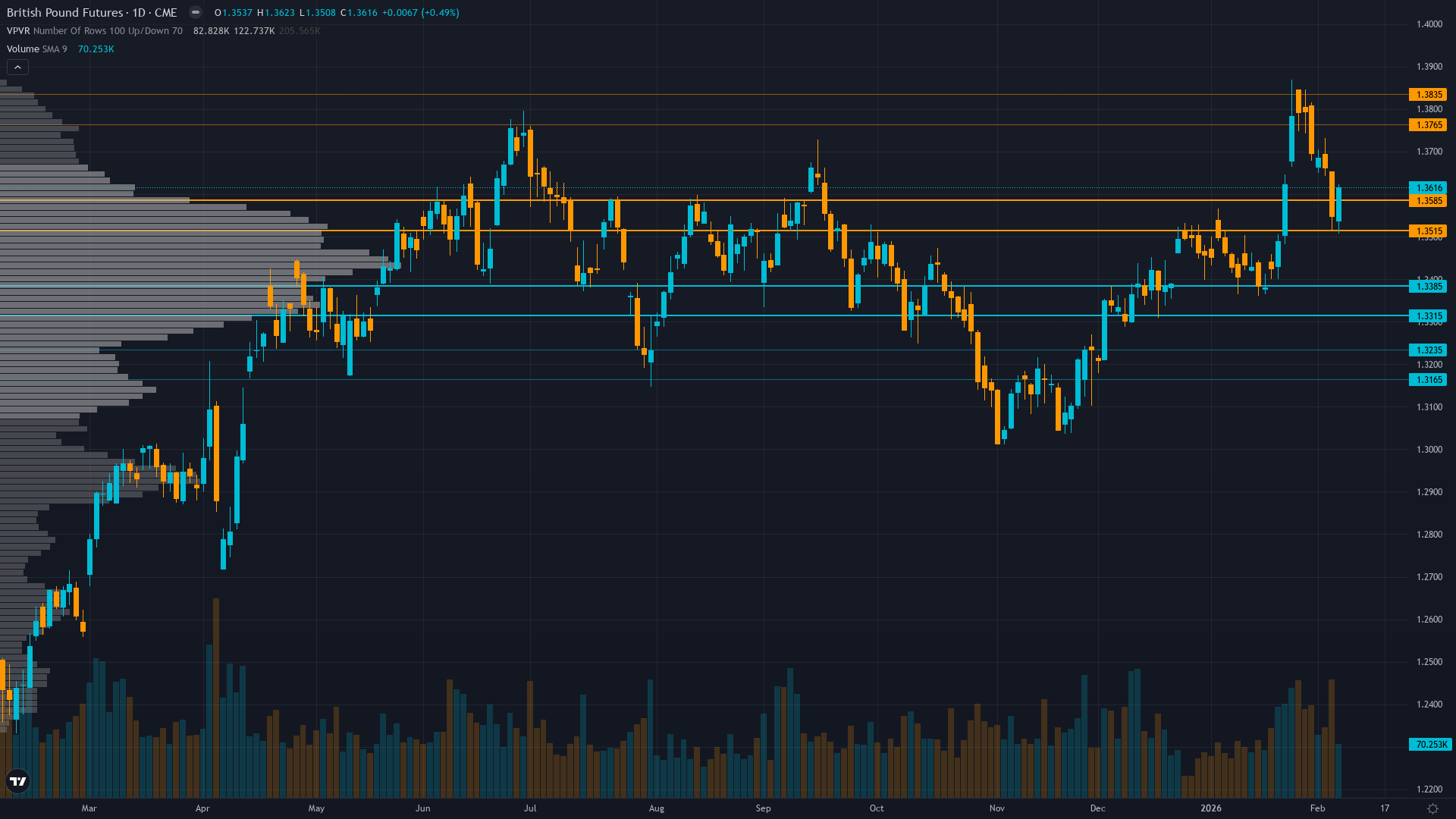
Neutral to mildly bullish consolidation expected as February 5 BoE narrow 5-4 vote signals approaching end of easing cycle despite persistent inflation while USD weakness provides tailwind offsetting bearish February seasonality
Bank of England February 5 rate decision holding rates at 3.75% via narrow 5-4 vote creating hawkish undertones despite persistent UK inflation at 3.4%
US dollar weakness with DXY near 97.14 down 10% year-over-year providing meaningful cross-current support entering Q1 2026
February seasonality historically bearish for GBP/USD with average -0.3% returns since 1971 creating near-term headwind despite constructive fundamentals
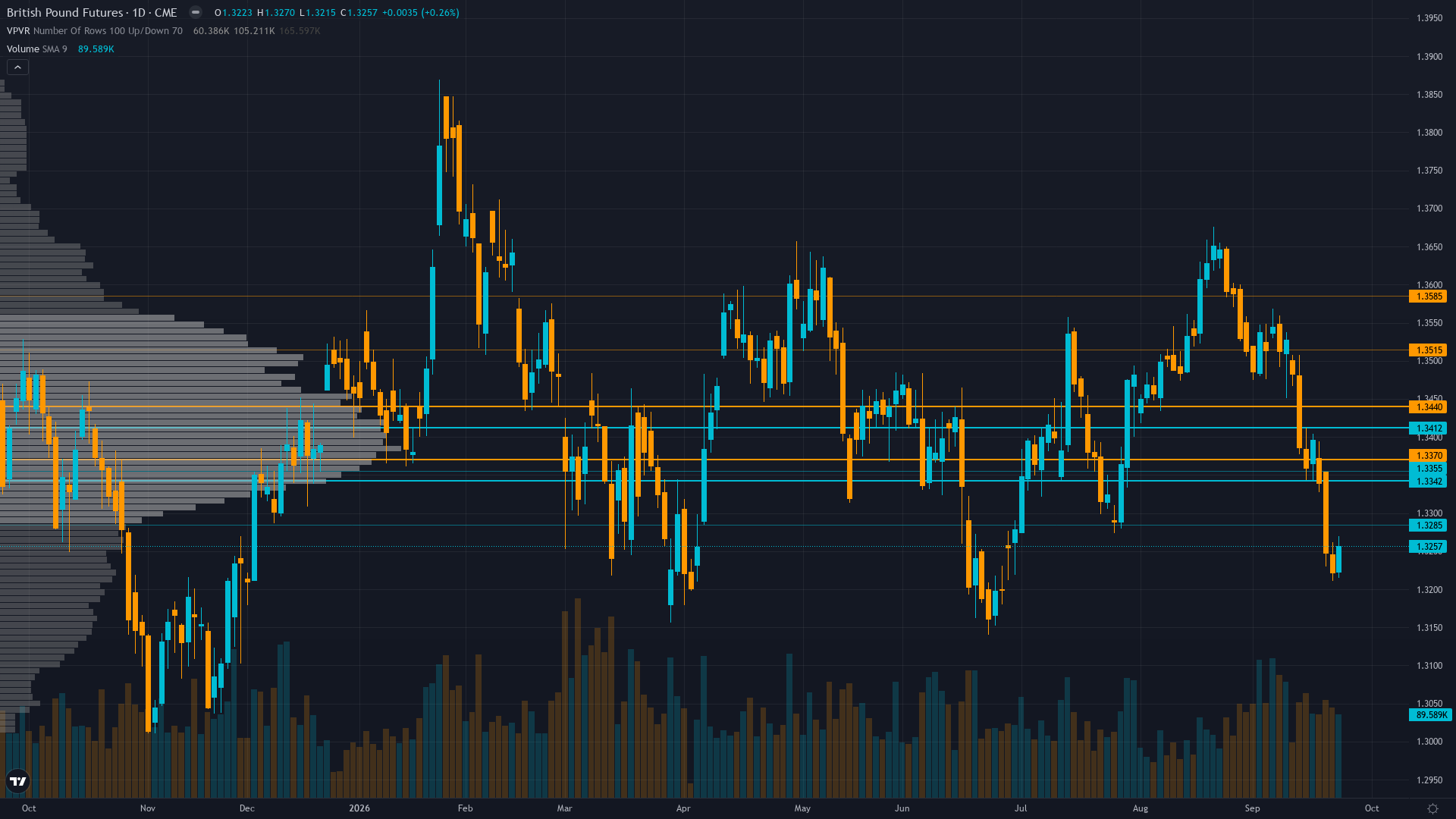
| ▲ Resistance Zone 2 | 1.3780 – 1.3820 |
| ▲ Resistance Zone 1 | 1.3530 – 1.3570 |
| ─ Pivot Area | ~1.3406 |
| ▼ Support Zone 1 | 1.3330 – 1.3370 |
| ▼ Support Zone 2 | 1.3180 – 1.3220 |
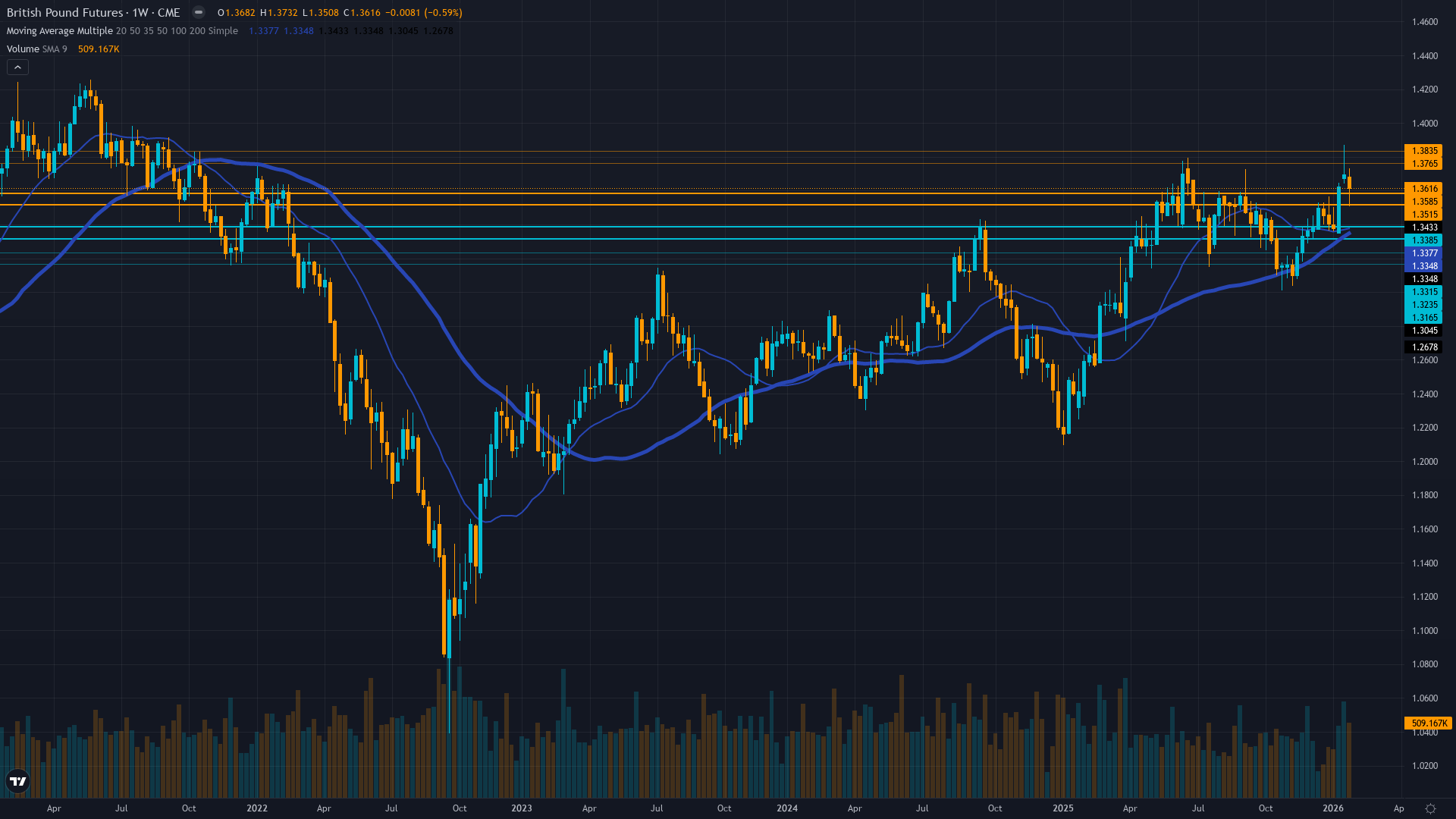
Consolidation above critical 1.335 support after recovering 3.9% from November lows trading near 7-week highs with bullish momentum building toward 1.355-1.38 resistance zone
BoE delivered expected December 25bp cut to 3.75% but narrow 5-4 vote proved hawkish surprise signaling potential end of aggressive easing cycle despite inflation at 3.4% for 16th consecutive month above 2% target
Cautious short covering from December lows with reduced bearish conviction following narrow 5-4 BoE vote split but maintaining defensive stance ahead of Q1 2026 data releases
Volatility at 39th percentile (12.2% annualized 20-day) with forward premiums building around monetary policy catalysts creating mild backwardation in term structure
UK inflation fell to 3.4% in December from 3.6% October but remains 1.4pp above 2% target while Q3 GDP growth at 0.1% shows persistent fragility conflicting with price pressures creating acute BoE policy dilemma
Normal with post-February 5 BoE meeting compression evident, forward curve showing mild backwardation with elevated premiums building around March 19 BoE meeting as event premium dissipates from February decision
Central bank rate hold decisions with narrow vote splits typically generate 1-2 day volatility compression followed by 3-4 week stability period in 70% of cases, current pattern tracking normally with March catalyst building gradually. February historically shows lowest monthly volatility for GBP at 3.4% average but dual catalyst environment creates elevated potential for breakout moves on data surprises
Current volatility at 39th percentile below median suggests normalized environment post-February BoE meeting, typical central bank decision volatility spikes lasting 2-3 days followed by 2-4 week normalization pattern now complete with next expansion likely around March 19 meeting within 48-72 hours of decision
Normal volatility environment allows standard risk management with 1.0-1.5% daily ranges expected in current consolidation, potential for 2-3% moves around March 19 BoE meeting given inflation persistence creating policy uncertainty with wider stops advised around event windows particularly if hawkish surprise materializes
Current vol regime at 39th percentile suggests 2-4% total move potential through March 19 BoE meeting versus normal 3% monthly range, with asymmetric upside opportunity if hawkish pause materializes contrary to market pricing of continued easing trajectory while thin February liquidity could amplify directional moves on inflation or GDP data surprises in coming weeks
|
⚠️ Primary Risk
BoE resumes aggressive easing at March meeting if UK economic data deteriorates below current 0.1% Q3 growth or global risk-off sentiment returns driving USD safe-haven demand negating recent GBP strength Probability: MEDIUM
|
✦ Primary Opportunity
Extended GBP recovery toward 1.38-1.40 range if BoE March meeting signals extended pause as inflation persistence above 3.4% forces hawkish recalibration while USD weakness accelerates into Q1 2026 per historical seasonality Timeframe: 4-8 weeks through March BoE meeting assuming inflation remains above 3% and Fed maintains dovish trajectory while post-February seasonal patterns support GBP strength into spring
|
British Pound futures stand at a critical inflection point on February 8, 2026, trading at 1.3406 (down 0.16% in past 24 hours) after the Bank of England's February 5 knife-edge 5-4 vote to hold rates at 3.75%. This narrow margin marks the second consecutive split decision following December's 25bp cut, signaling deep MPC division about continuing the easing cycle despite UK inflation at 3.4% for the 16th consecutive month above the 2% target. The pound has staged a notable recovery from November 2 lows at 1.3155, benefiting from two powerful tailwinds: the BoE's hawkish voting patterns and sustained US dollar weakness with DXY trading near 97.14, down 10% year-over-year.
However, February seasonality presents a near-term headwind with GBP/USD historically averaging -0.3% returns since 1971, creating tension between constructive fundamentals and seasonal patterns. Technical structure reveals consolidation above critical 1.335 support with immediate resistance at 1.355 and major resistance at 1.38. The fundamental crosscurrent is acute: persistent UK inflation at 3.4% argues for continued BoE restraint supporting GBP, while growth fragility with Q3 GDP at 0.1% and the November 26 Autumn Budget's £26.1bn tax rises create downside vulnerability.
Markets now expect inflation to fall to 2.6% in 2026 per EY forecasts, with the BoE potentially delivering one further cut to 3.5% by April if data cooperates. The volatility landscape shows normalization at the 39th percentile (12.2% annualized 20-day) with forward premiums building around the March 19 catalyst. Current positioning reflects cautious optimism that worst of GBP weakness may be behind, with the narrow vote splits and persistent inflation creating asymmetric upside if the BoE maintains its pause stance longer than markets anticipate.
The convergence of hawkish BoE inflection potential, sustained USD weakness entering Q1 2026, and post-February seasonal strength creates a constructive medium-term environment for Sterling with the 1.355-1.38 zone representing key resistance that could unlock further upside toward the 1.40 psychological level if broken convincingly.
| Week | Bias | Confidence |
|---|---|---|
| February 8, 2026 | NEUTRAL | 7/10 |
| February 1, 2026 | NEUTRAL | 7/10 |
| January 25, 2026 | NEUTRAL | 7/10 |
| January 18, 2026 | NEUTRAL | 7/10 |
| January 11, 2026 | NEUTRAL | 7/10 |
| January 4, 2026 | NEUTRAL | 7/10 |
| December 28, 2025 | BULLISH | 8/10 |
| December 21, 2025 | NEUTRAL | 8/10 |
| December 14, 2025 | NEUTRAL | 8/10 |
| December 7, 2025 | NEUTRAL | 7/10 |
| November 30, 2025 | NEUTRAL | 7/10 |
| November 23, 2025 | NEUTRAL | 7/10 |